Choosing a No-Drill Attachment for Sea Glass Jewelry
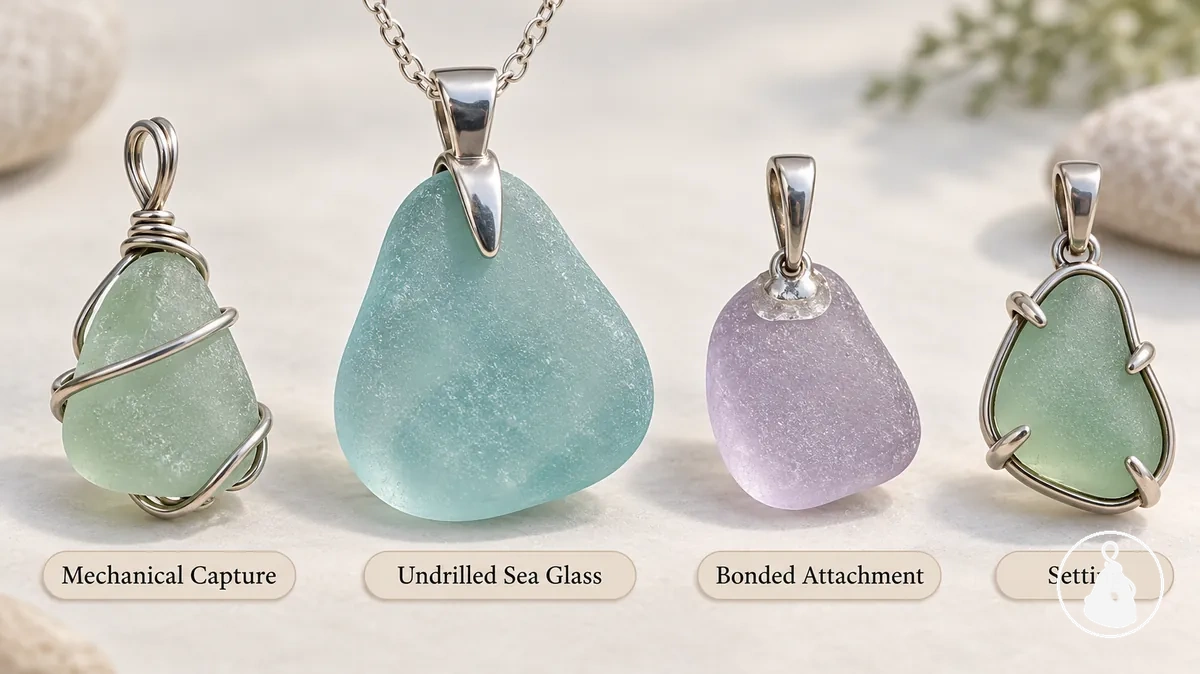
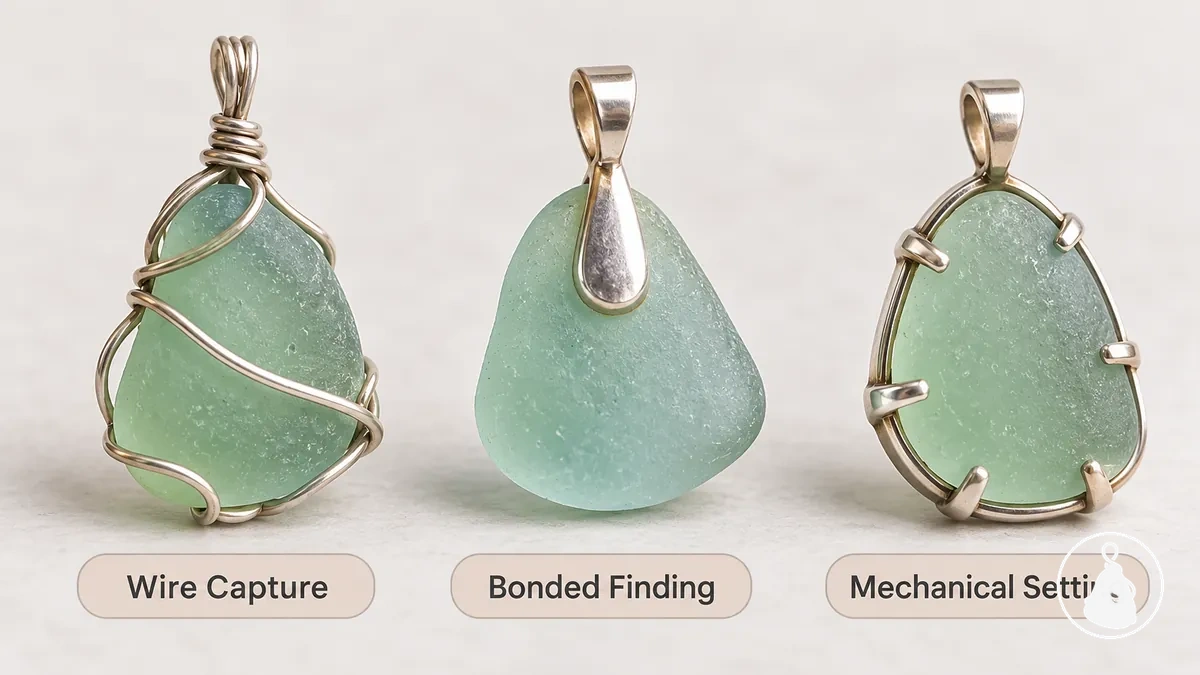
For undrilled sea glass, choose the attachment by the way the piece can be retained: wire capture when its contours provide usable retention points, a bonded finding when there is a suitable mounting area for the finding’s footprint, or a mechanical setting when the piece fits the holder with adequate edge or perimeter support and no persistent movement. Then compare weight and leverage, surface condition, transparency, tool or skill needs, and intended use before making the final choice.
Choose by the retention interface first
Start with the physical condition that must hold the glass. The method is suitable only when its required capture, bond, or support can be achieved on the individual piece.
Wire capture
Best fit when: the outline provides contours or retention points that allow wire to restrain movement.
Retention: external mechanical capture; adhesive is not inherent to the method.
Watch: wire must prevent escape rather than simply touch the glass, and the wire remains visually present.
Bonded finding
Best fit when: the finding’s mounting footprint can make usable contact with the glass surface.
Retention: an adhesive bond at the available contact area.
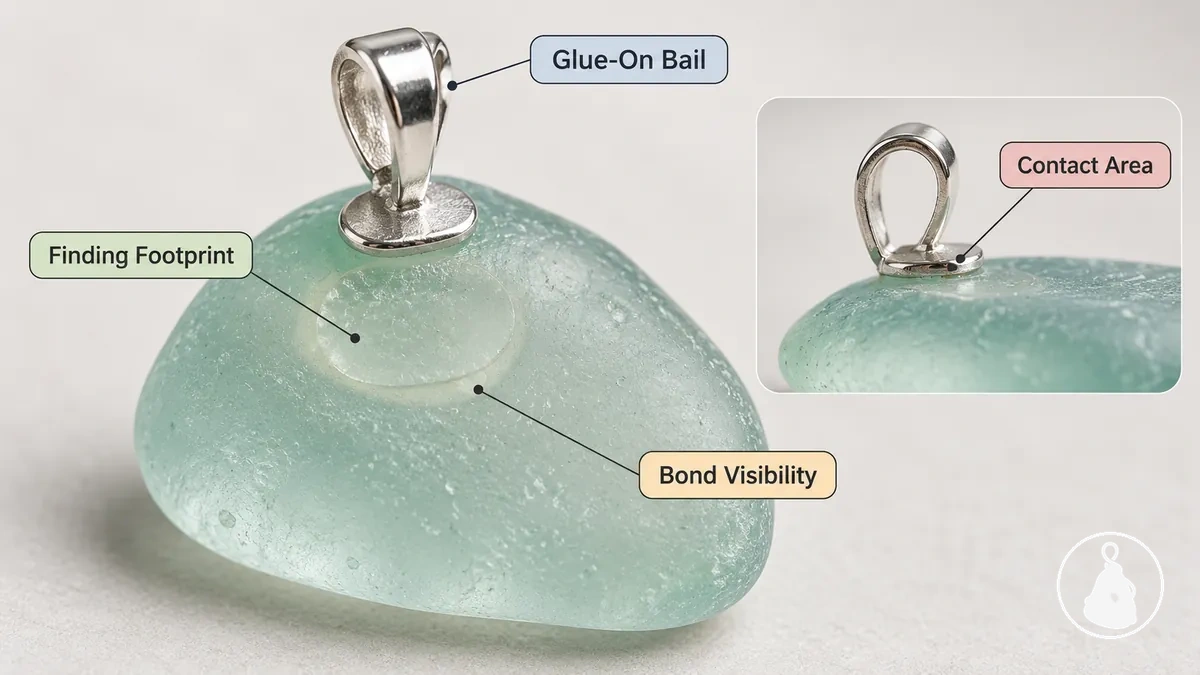
Watch: surface condition, contact geometry, load and leverage matter; transparent glass can reveal the footprint.
Mechanical setting
Best fit when: the piece’s shape and thickness correspond to a holder that can provide edge or perimeter support.
Retention: enclosure, edge capture, or surrounding mechanical support.
Watch: persistent movement or insufficient perimeter contact indicates a poor fit, and the holder may cover part of the glass.
Decision rule: eliminate any method whose required retention condition cannot be achieved. Compare appearance, adhesive preference, tool or skill demand, reversibility, and intended use only after the attachment-to-glass fit is workable.
The sections below explain the three retention mechanisms, the piece attributes that change suitability, and the point at which a no-drill method becomes a poor fit.
Table of Contents⌄
What No-Drill Sea Glass Attachment Means
No-drill sea glass attachment means securing sea glass for jewelry without creating a new hole in the glass. Retention stays outside the glass through mechanical capture, a bonded finding, or a setting.
No-drill
The glass remains undrilled; the attachment retains it externally by capture, bonding, or a setting.
Drilled
A new hole is made through the glass so the jewelry connection can pass through that opening.
Predrilled
The glass already has a hole available for a hole-based jewelry connection.
The defining boundary is therefore the attachment path: drilled and predrilled pieces use a hole, while a no-drill method depends on an external retention interface.
No-Drill Attachment Methods for Sea Glass
The main no-drill attachment methods are wire capture, bonded findings, and mechanical settings. They differ first by the way the attachment physically retains the glass, and second by the visual and construction trade-offs created by that interface.
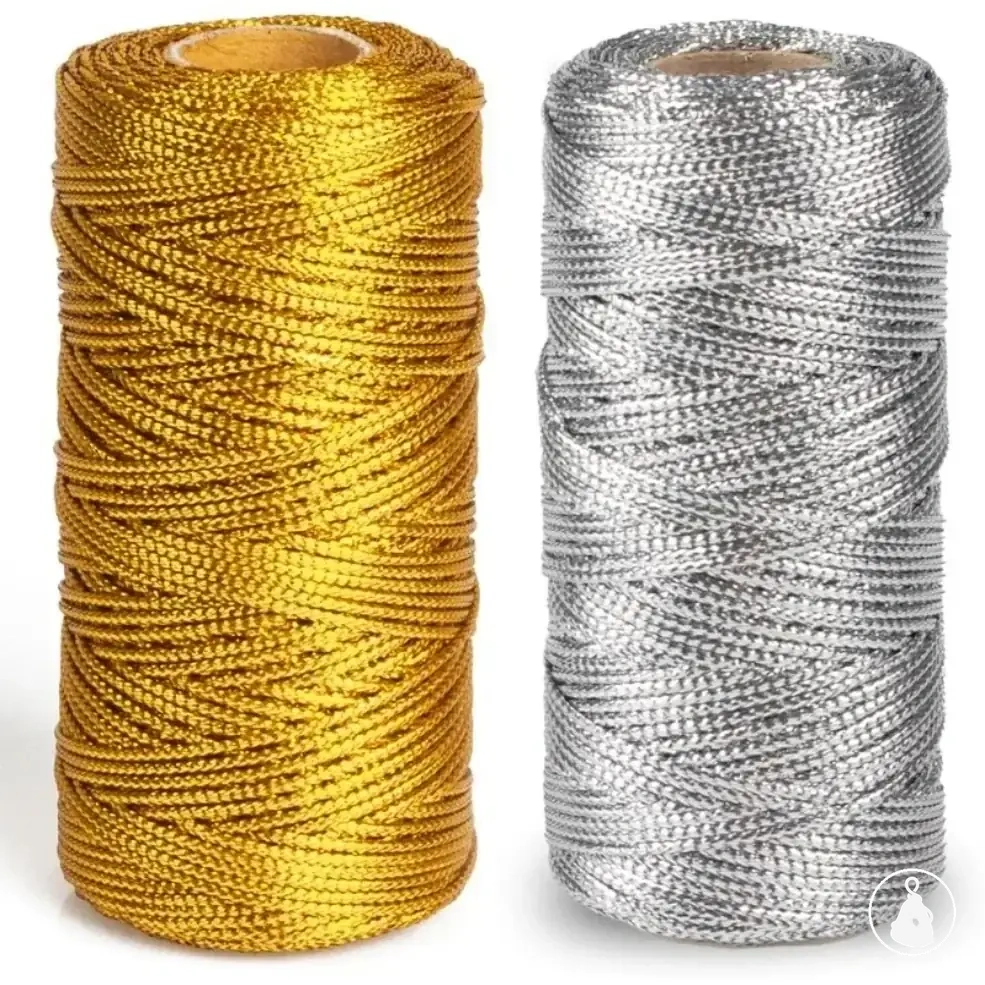
Wire capture: Wire wrapping forms mechanical capture around undrilled sea glass, with visible wire forming part of the jewelry attachment.
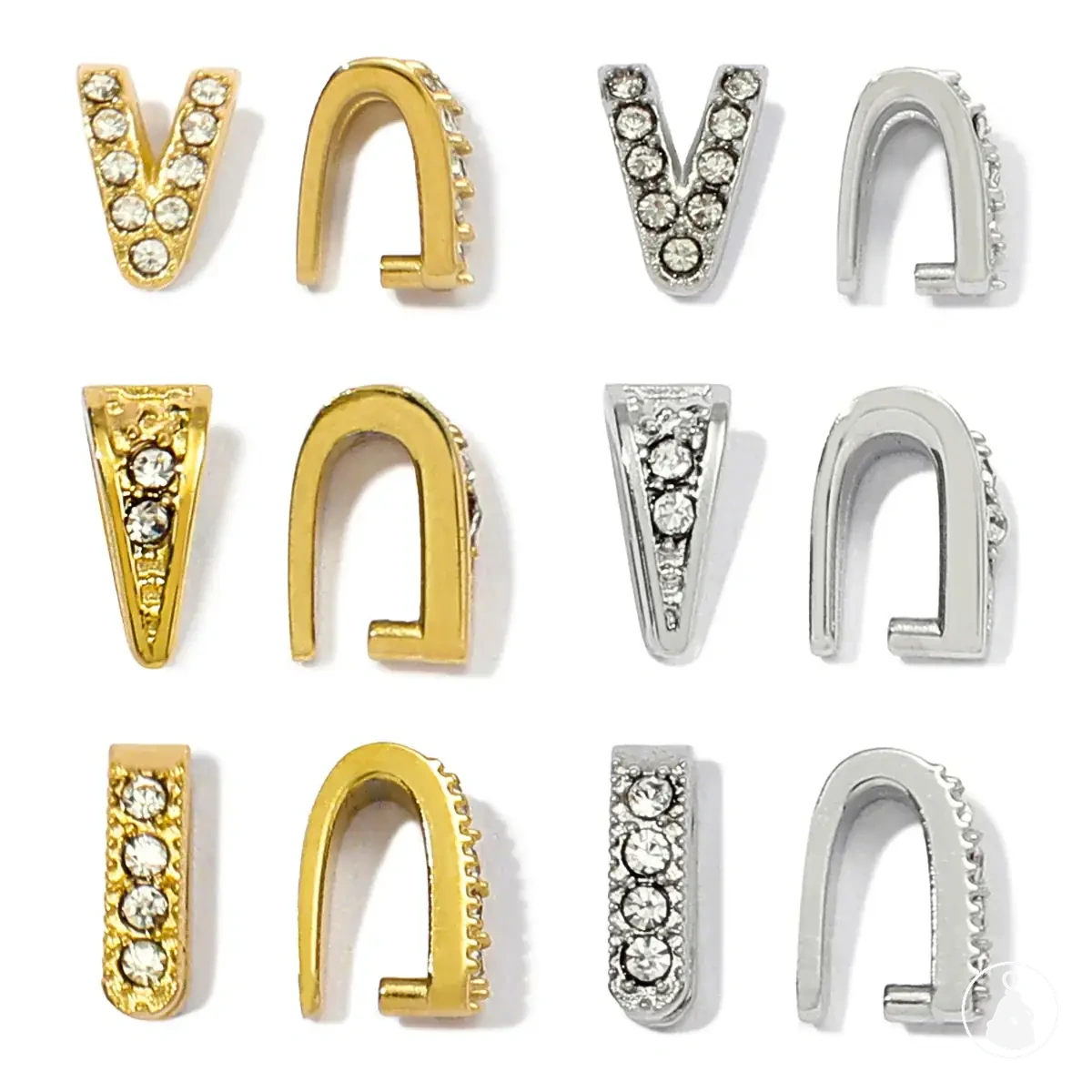
Bonded findings: A glue-on bail creates a bonded attachment through contact between the finding and the glass surface, making the available contact area relevant to retention and the finding potentially visible through transparent glass.
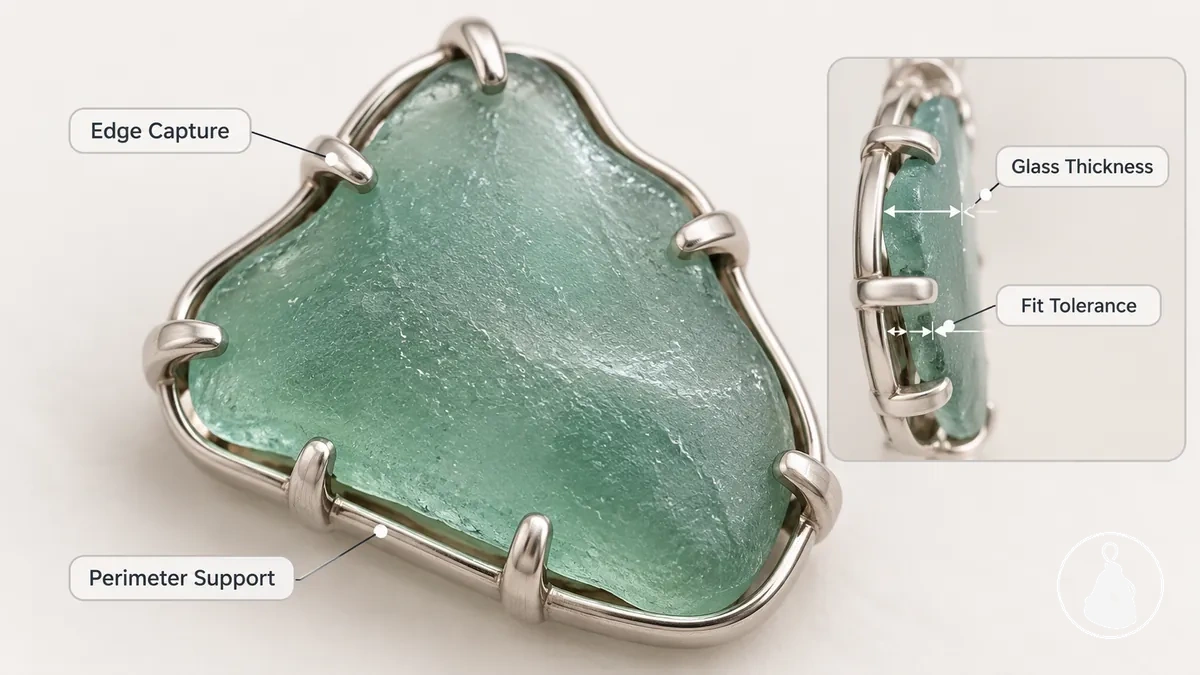
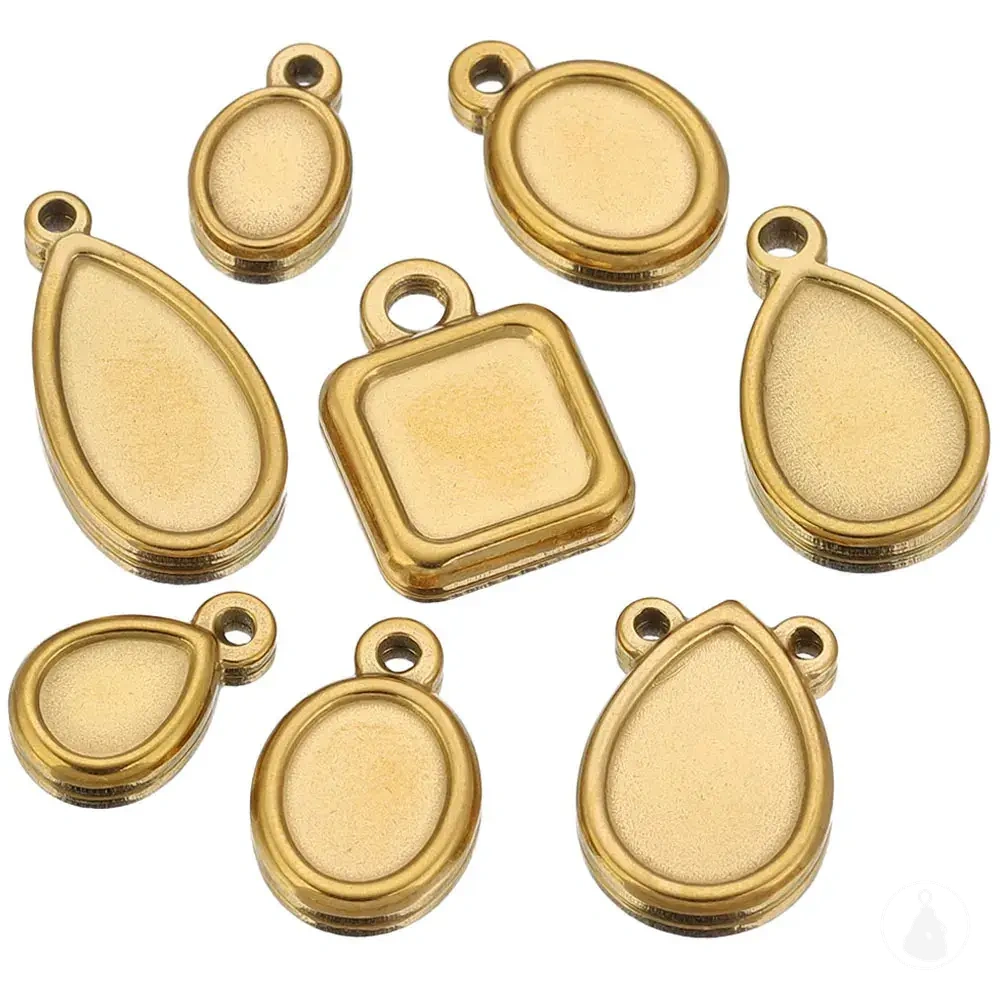
Mechanical settings: A bezel, cage holder, or similar setting uses edge or surrounding capture, so retention requires the holder and the sea glass to correspond in shape and fit.
For an irregular piece, wire can follow external contours while a rigid holder must match the piece’s geometry. With transparent glass, wire, a finding footprint, or setting coverage can also become a more visible part of the finished design.
Wire Wrapping and Wire Capture
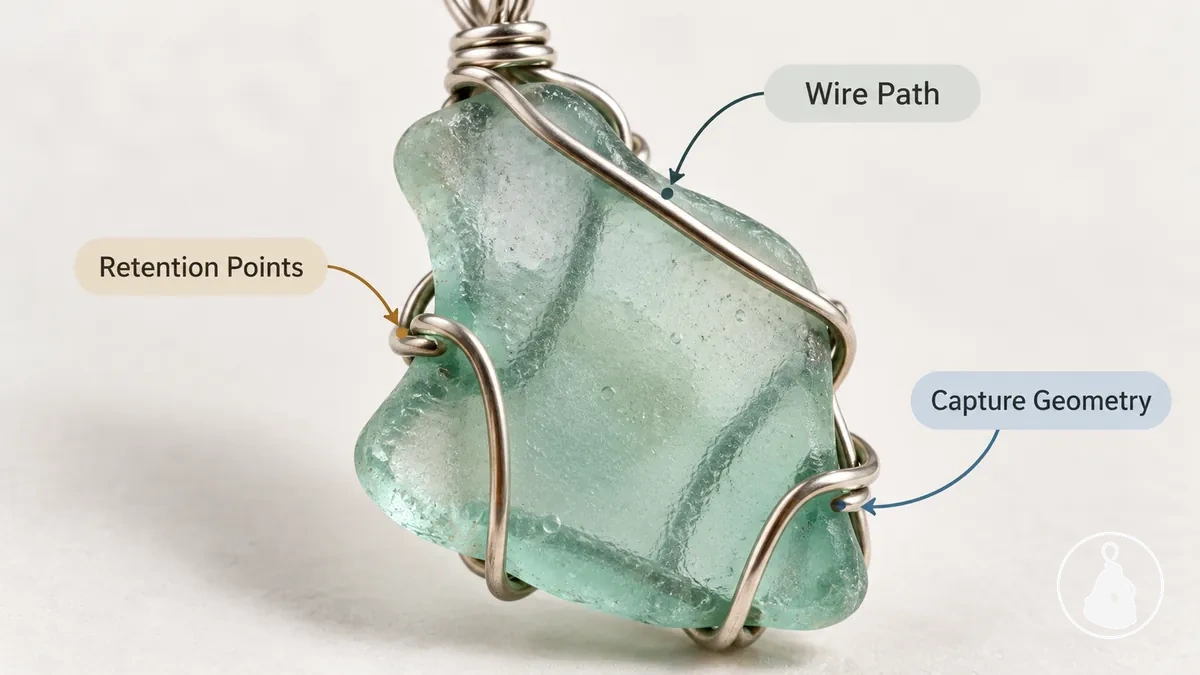
Wire wrapping uses wire capture to mechanically restrain undrilled sea glass by crossing or surrounding the piece at usable retention points. The governing requirement is capture geometry: the wire path must restrict movement rather than merely lie against the glass.
Good fit when
Contours or changes in outline provide usable retention points that let the wrap mechanically restrain the piece.
Less suitable when
The profile provides too few capture points or the wire path can shift without blocking movement of the glass.
Appearance
On transparent or highly translucent glass, wire crossing the face or edges can become a prominent design element.
Construction check
Security depends on controlled wire placement and formation; usable geometry does not compensate for a wrap that fails to maintain mechanical restraint.
Adhesive Bails and Bonded Findings
An adhesive bail or bonded finding attaches to undrilled sea glass through an adhesive interface between the finding’s mounting footprint and the glass surface. It therefore depends on a usable contact area rather than on mechanical enclosure.
Contact area
The mounting pad needs a usable surface area that corresponds to its footprint; a shape that leaves only limited contact is a weaker fit for this method.
Surface condition
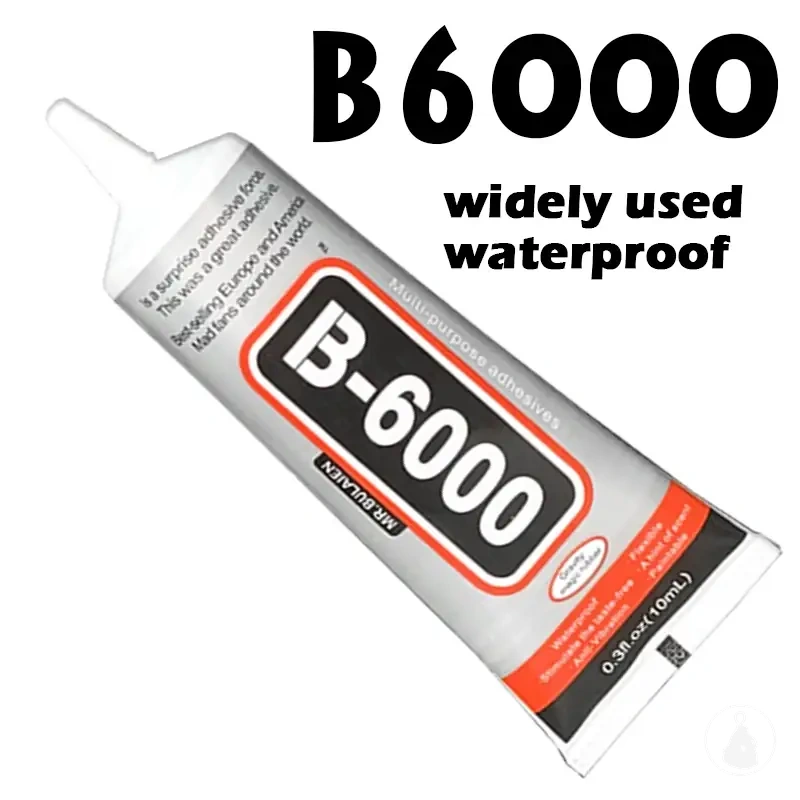
The actual mounting surface must be suitable for the chosen adhesive system, including any preparation and curing conditions specified for that adhesive.
Load and leverage
Greater load or leverage increases demand on the bonded interface, so bond performance should not be treated as a fixed strength across all glass, findings, and constructions.
Appearance
With transparent sea glass, the finding footprint or bond area can remain visible through the piece and become part of the visual decision.
Mechanical Settings and Cage Holders
A mechanical setting, including a bezel or cage holder, retains undrilled sea glass through enclosure, edge capture, or support around its perimeter. The holder must correspond to the piece closely enough to provide support while limiting unwanted movement.
Geometry
The piece’s shape and thickness must correspond to the holder’s capture geometry and available fit tolerance.
Support
Useful edge or perimeter contact should support the glass at the points needed to maintain mechanical retention.
Movement
Persistent shifting within the holder indicates that fit or support is insufficient, even if the piece can physically be inserted.
Coverage
More enclosure can change how much of the glass edge or perimeter remains visible, making holder coverage part of the appearance trade-off.
Choose by Glass Shape, Weight, Surface, and Transparency
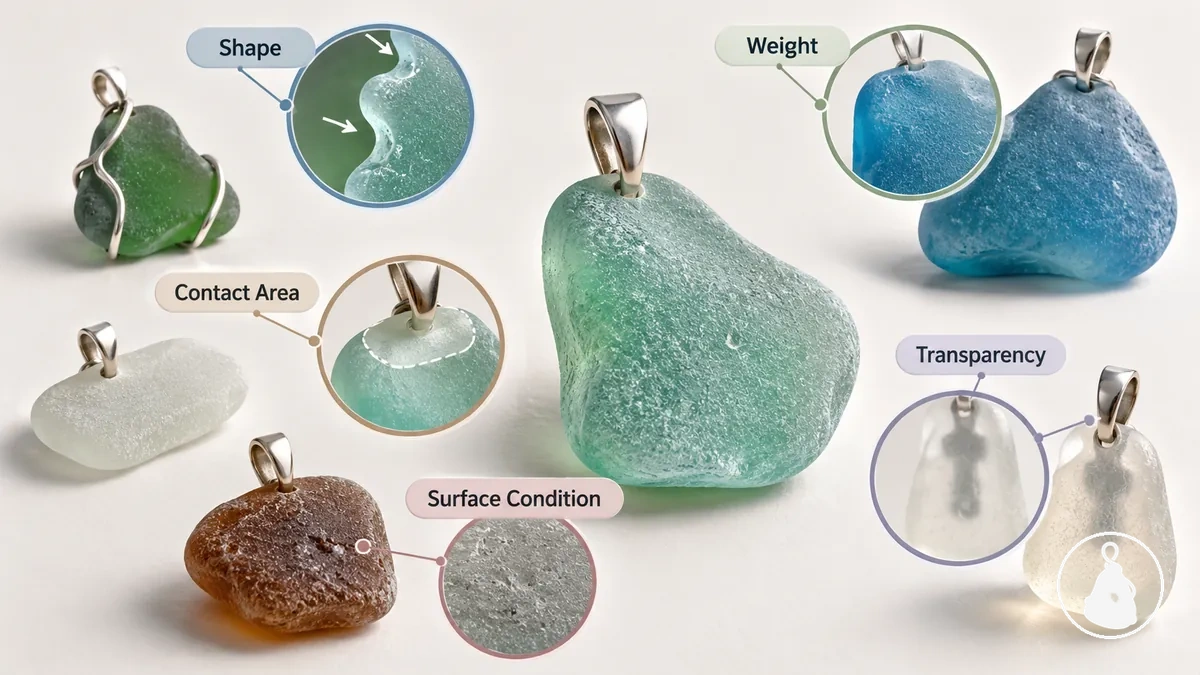
Choose a no-drill attachment by assessing the individual sea glass piece before preferring a method. The core checks are shape, weight and leverage, usable contact area, surface condition, and transparency.
Shape: Check whether the outline provides usable retention points for capture geometry or corresponds closely enough with a holder for setting fit.
Weight: Consider weight together with support and leverage; greater load or leverage increases the mechanical demand placed on the retention method and its construction.
Contact area: Check whether a bonded finding has a usable mounting area for its footprint rather than treating any flat-looking surface as sufficient.
Surface condition: Assess the actual mounting surface because its condition forms part of the interface used by a bonded attachment.
Transparency: Check how the finding footprint, wire path, or setting coverage affects visibility through or around the glass when appearance matters.
Treat retention as the first filter: contours can favour capture, a usable mounting surface can favour a bonded finding, and compatible shape and thickness can favour a setting. Then use transparency and attachment coverage to judge whether the visible result suits the intended design.
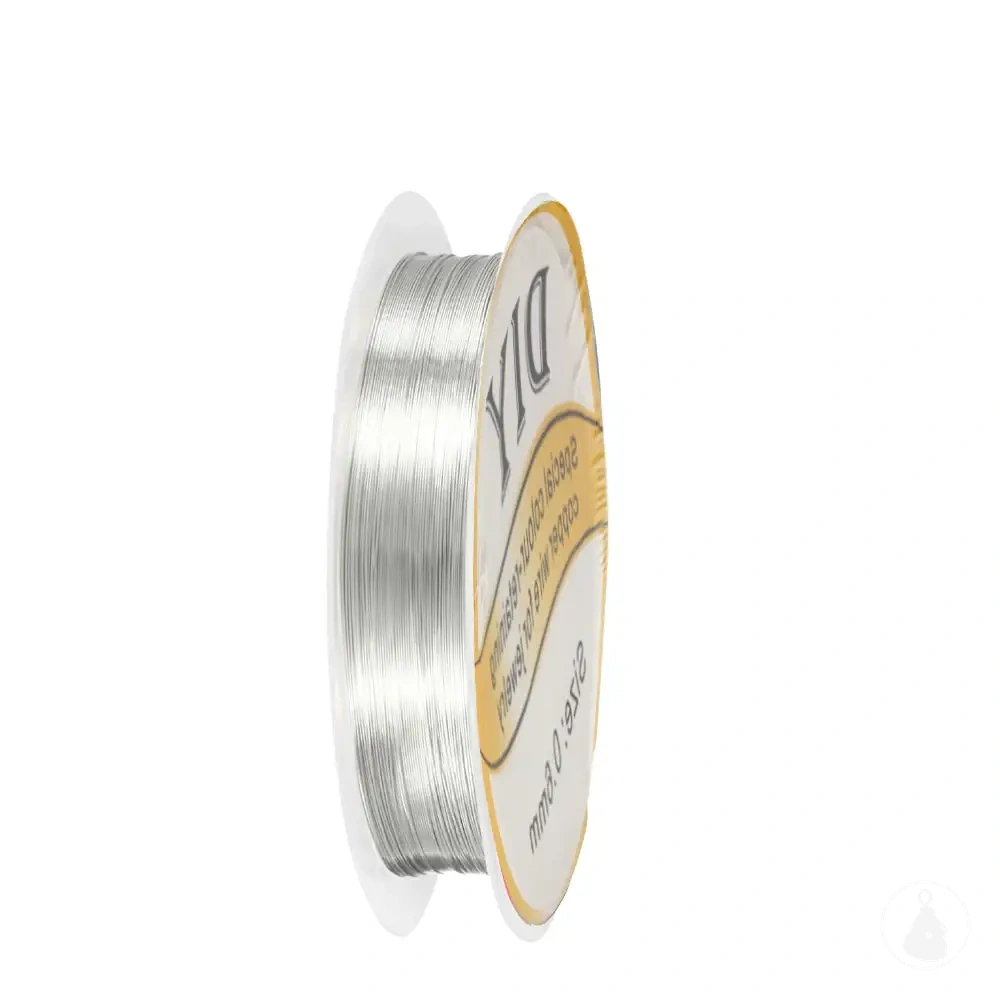
These product examples relate to the materials and findings discussed above. Check the listing’s dimensions, material, attachment type, and fit against your specific glass piece before choosing.
Compare Security, Appearance, Tool Needs, and Bond Dependence
Wire capture, bonded findings, and mechanical settings create different trade-offs across retention conditions, appearance, tool or skill demand, reversibility, and adhesive dependence. Compare those secondary criteria only after the method’s required attachment-to-glass fit is workable.
Security is conditional rather than a fixed score: wire requires capture geometry that restricts movement; a bonded finding requires a suitable bonding interface; and a setting requires appropriate fit, edge or perimeter support, and controlled movement within the holder.
How the three no-drill attachment families differ
Method
Security conditions
Appearance
Tool or skill demand
Reversibility
Adhesive dependence
Wire capture
Requires capture geometry and retention points that mechanically restrict movement
Wire remains visibly part of the attachment and can cross edges or faces
Requires skill in forming and positioning wire around the piece; tool needs depend on the construction
Potentially reworkable when the construction can be opened without damaging the glass or attachment
No adhesive is inherent to the capture mechanism
Bonded findings
Requires usable contact area, suitable surface condition, and an adhesive bond appropriate to the finding and glass interface
The finding footprint and bond area can be noticeable, particularly through transparent glass
Requires preparation and placement of the bonded interface; specific tool needs depend on the adhesive system and construction
Depends on the adhesive system and construction; separation without affecting the glass or finding should not be assumed
Adhesive forms the retention interface between the finding and sea glass
Mechanical settings
Requires setting fit, edge or perimeter support, and controlled movement within the holder
The holder can visibly cover part of the edge or perimeter
Skill and tool demand depend on the setting construction and how the piece is seated and retained
Depends on the holder construction and how the setting mechanically retains the piece
No adhesive is inherent when retention is entirely mechanical
If appearance is the priority, compare how much wire, finding footprint, or holder coverage remains visible on the specific piece. If adhesive avoidance matters, wire capture and a purely mechanical setting meet that condition, while bonded findings inherently depend on an adhesive interface.
The examples below correspond to materials or findings mentioned in the comparison. Verify product dimensions and compatibility on the listing rather than assuming a generic finding will fit every sea-glass piece.
A no-drill attachment becomes a poor fit when the sea glass cannot be captured, bonded, or supported adequately by the chosen retention method. The boundary is visible at the interface: capture needs usable retention geometry, bonding needs a workable mounting area, and a setting needs support that limits unwanted movement.
Capture limit: The glass profile does not provide usable retention points for the intended mechanical capture.
Bonding limit: The available surface does not provide adequate bonding area for the finding's required contact.
Setting limit: Poor setting fit leaves inadequate perimeter support or permits unwanted movement.
Load limit: The piece's weight, leverage, or use condition increases stress on a connection whose support is already marginal.
Visual limit: Wire, a finding footprint, or setting coverage conflicts with the intended appearance of the finished piece.
Weight, leverage, repeated use, and visual coverage can make a marginal interface less suitable. A heavier or more highly leveraged piece places more demand on the connection, while visible wire, a bonded footprint, or setting coverage can rule out an otherwise workable method when it conflicts with the intended design.