Sea Glass Jewelry Settings: Types, Fit, and Selection
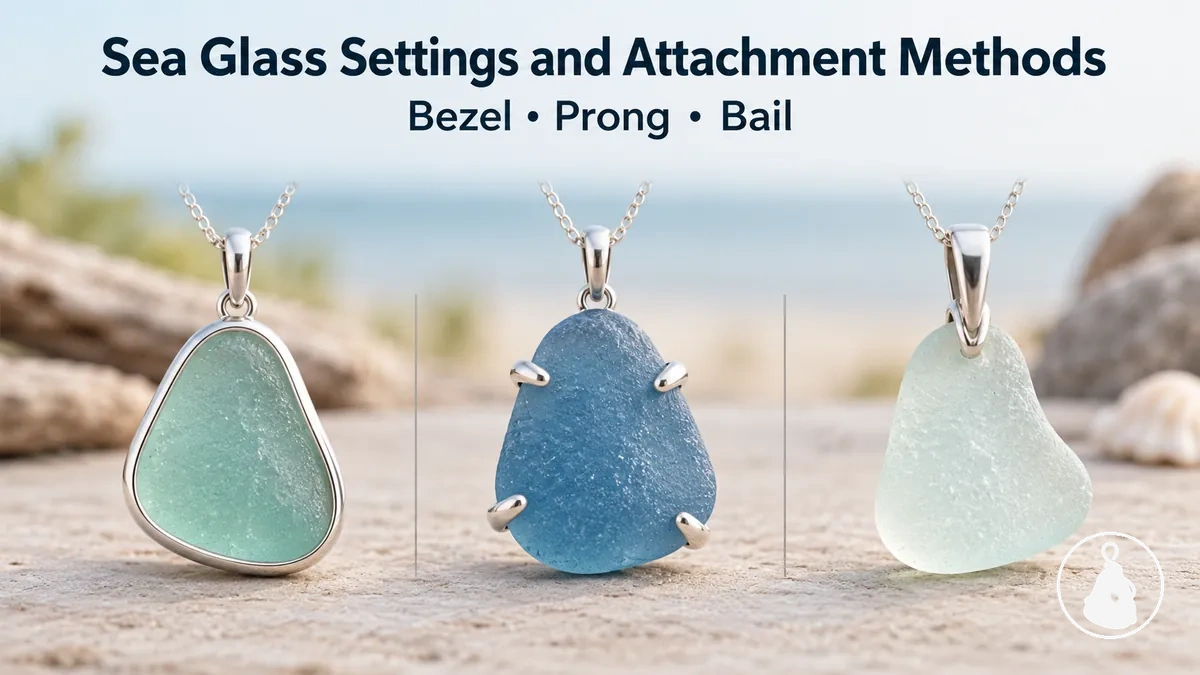
Choose a sea glass jewelry setting by matching the piece’s shape, thickness, and contour to the setting’s contact geometry first, then compare the retention you need, how much glass you want exposed, and how much fitting or adjustment the setting requires. A bezel uses surrounding edge support, a backless bezel keeps the rear face open, prongs or claws use discrete stable contact points, and a bail or cap primarily provides a hanging connection; none is universally suitable without a compatible fit.
Choose by function, fit, then priority
Use this sequence to narrow the setting type before comparing individual products or findings.
- Identify the function. Use a setting when the main task is to retain the glass; use a bail or cap when the main task is to create the hanging connection. Some cap designs combine both roles.
- Verify physical fit. Match the setting’s contact areas to the actual piece’s shape, thickness, contour, and seating. A nominal outline or listed size alone does not establish compatibility.
- Choose the contact architecture. Surrounding edge support favours bezel-style retention; an open back preserves rear-face visibility; discrete stable edge positions can suit prongs or claws.
- Confirm the finished condition. The glass should remain properly seated without rattle, slip, or uncontrolled movement, while the chosen exposure and adjustment effort remain acceptable.
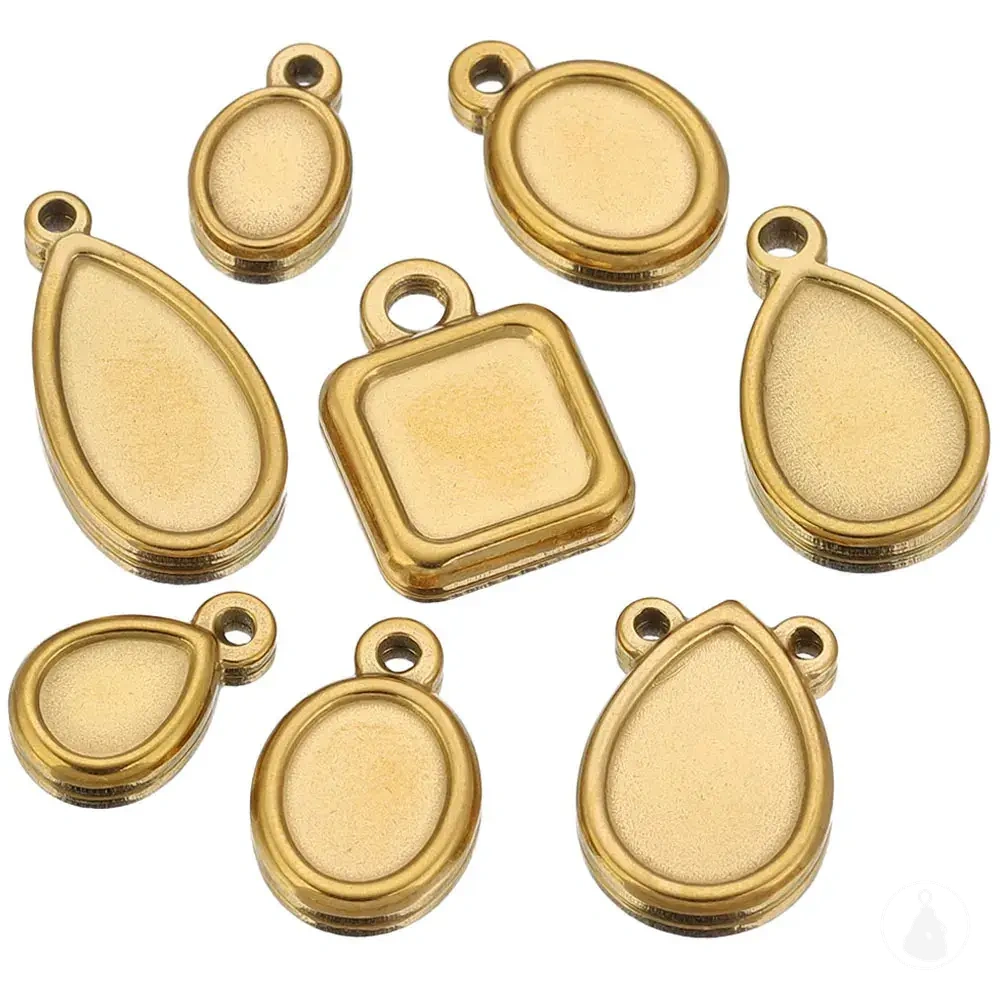
- Bezel
- Surrounding edge support with backing; prioritise a close perimeter fit and accept reduced rear-face exposure.
- Backless bezel
- Surrounding edge support with an open back; choose when rear visibility matters and the edge fit still provides stable retention.
- Prong or claw
- Discrete edge contacts; choose only when stable contact points can collectively restrain the actual contour.
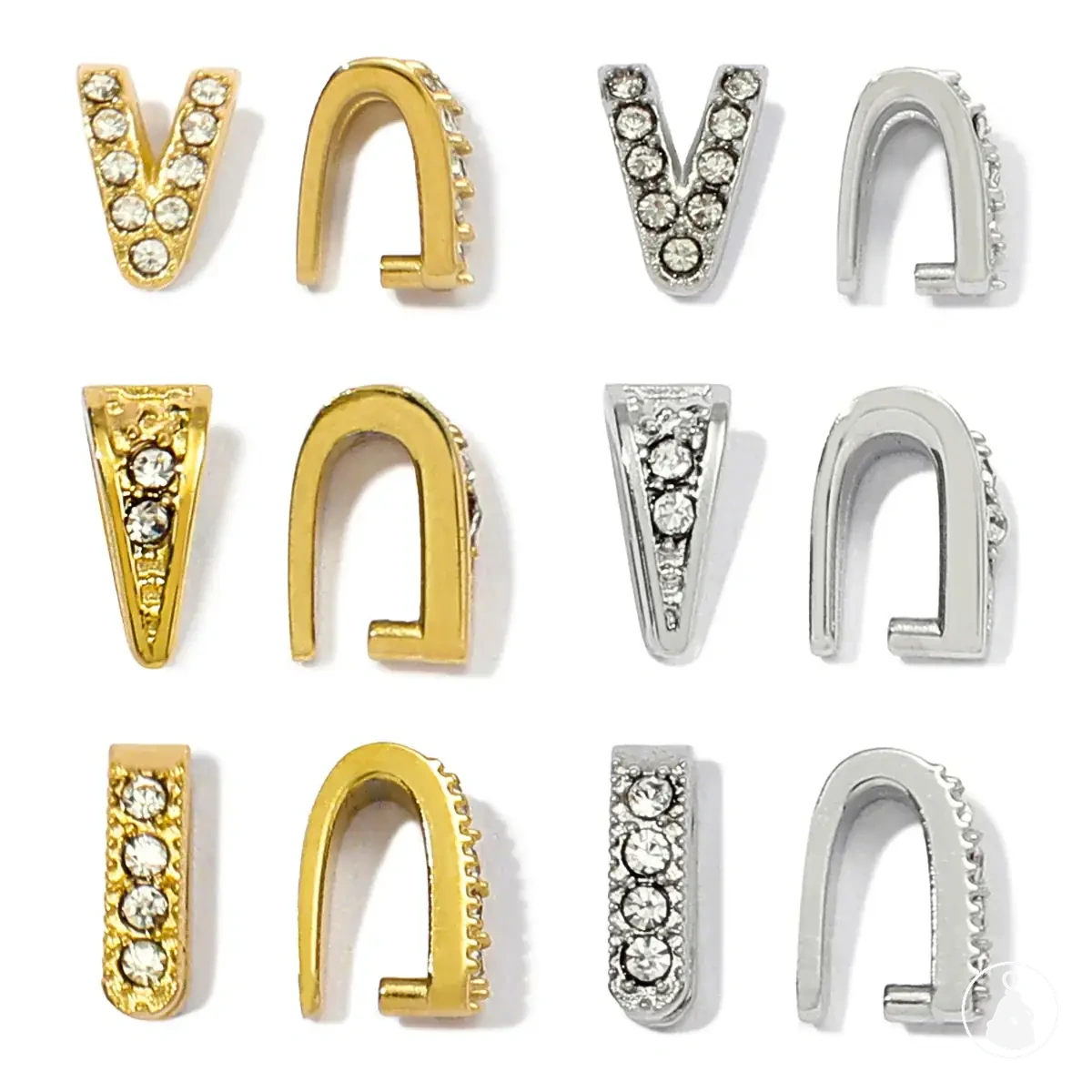
- Bail or cap
- Connection-first attachment; check seating/contact area and hanging orientation against the glass geometry.
This page focuses on setting and attachment selection; drilling, wire wrapping, and adhesive application are separate jewelry-making decisions.
Table of Contents
Sea Glass Settings and Bail Attachments Have Different Functions
Function at a glance
Setting — retention. The setting holds or supports sea glass through surrounding edge support, backing, or discrete contact points. Suitability depends on where those contacts engage the actual glass.
Bail or cap — connection. A bail creates the hanging connection; a cap adds a seating or contact area and may combine connection with partial retention. Attachment position also affects hanging orientation.
Hybrid designs can overlap. When a cap both contacts the glass and carries the connection point, evaluate its retention contact and its hanging connection as separate functions.

A setting, bail, or cap can be part of a no-drill design when it retains or connects the sea glass without requiring a drilled hole; the same distinction still applies between holding the glass and providing the jewelry connection.
Bezel, Backless Bezel, Prong, and Bail Options Compared
Bezel, backless bezel, prong or claw, and bail or cap options differ in how they retain or connect sea glass and in the fit conditions they require.
The useful comparison is therefore retention or connection method, fit conditions, glass exposure, adjustment demand, and the resulting trade-off.
| Option | Retention or connection method | Fit conditions | Glass exposure | Adjustment demand | Main trade-off |
|---|---|---|---|---|---|
| Bezel | Continuous or near-continuous edge support retains the glass within a surrounding setting. | The bezel profile must follow the glass outline and accommodate its height and contour. | Edge coverage is greater, and a backed bezel also covers the rear face. | The setting requires adaptation around the glass perimeter and contour. | More surrounding support and edge coverage leave less glass visible where the setting covers it. |
| Backless bezel | Edge support retains the glass while the rear remains open. | The glass perimeter must suit the bezel profile and be supported without a full rear backing. | The open back leaves more of the rear glass visible than a backed bezel. | The bezel still requires adaptation to the glass outline and contour. | Greater rear glass exposure retains the need for a close relationship between edge support and fit. |
| Prong/claw | A prong setting or claw setting retains the glass at discrete contact points. | The contact points must correspond to parts of the contour or edge where they can engage the individual piece. | Glass remains exposed between the separate contact points. | Adjustment is concentrated at individual contact points around the glass contour. | Greater exposure between contact points concentrates retention at those selected areas. |
| Bail/cap | A bail or cap attachment primarily creates a connection point and can also contact or retain part of the glass in a hybrid design. | The attachment must seat against a compatible area of the glass while supporting the intended hanging orientation. | Glass outside the attachment's contact area remains exposed. | Adjustment is concentrated around seating, contact, and orientation rather than the full perimeter. | Limited surrounding coverage leaves more glass visible, while suitability depends on how the attachment contacts the particular glass shape. |
Bezel and backless bezel options use surrounding edge support, while a prong or claw setting concentrates retention at separate contact points and a bail or cap concentrates contact around its connection area.
A backed bezel covers the rear face, a backless bezel leaves it open, and separated prong or claw contacts leave glass visible between them.
These visible structural differences clarify where contact occurs and how much glass remains exposed, so suitability depends on whether the corresponding fit condition supports the required retention or connection.

For an irregular sea glass outline, adjustment demand differs by where the option must conform to the piece: a bezel follows the perimeter, a prong or claw arrangement concentrates adjustment at selected contact points, and a bail or cap concentrates it around its seating and connection area.
Each option is therefore suited conditionally to the glass profile and the retention or connection role required.
These setting and attachment trade-offs are distinct from broader comparisons of sea glass jewelry-making methods.
Bezel and Backless Bezel Settings
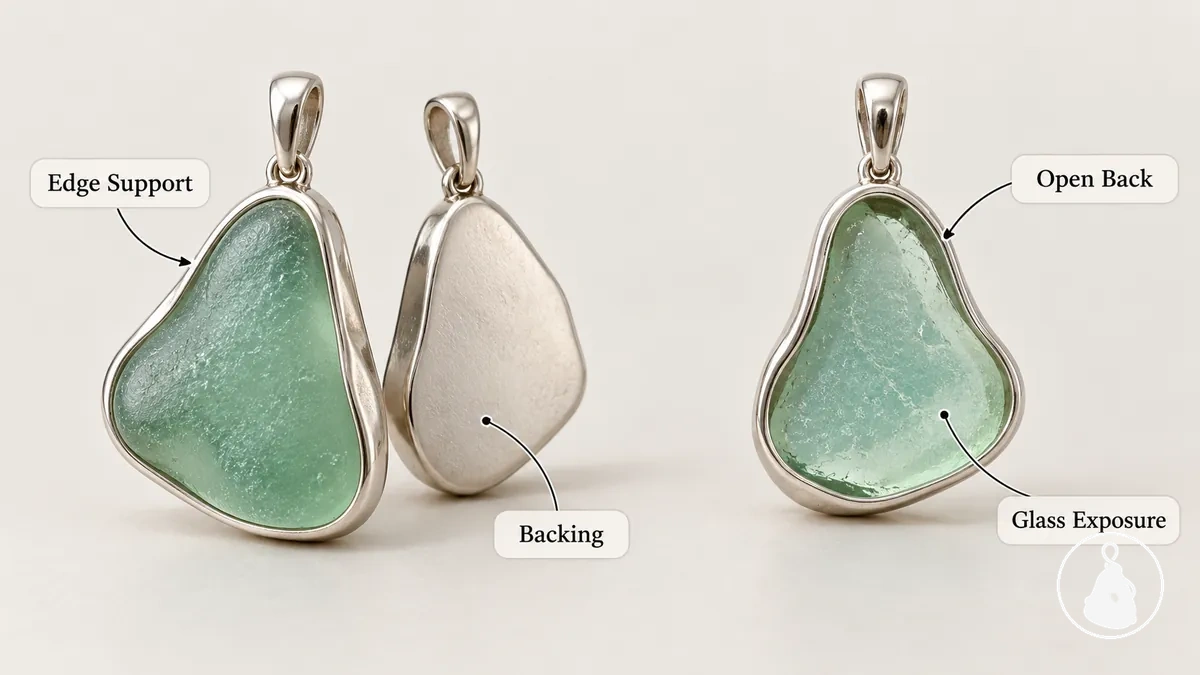
A bezel setting combines edge support with backing, while a backless bezel uses edge support around the sea glass with an open back.
In both configurations, retention relies on the setting contacting and supporting the individual glass contour rather than on a standard outline.
The image clarifies the backed-versus-open-back structure and its effect on glass exposure, while the required fit remains specific to the support pattern and glass shape.
Backed or open-back?
Backed bezel: surrounding edge support plus backing covers the rear face where the backing overlaps the glass. Choose it when that support and presentation suit the fitted piece.
Backless bezel: surrounding edge support with the rear face open. It can show both faces when the retention geometry and orientation support that presentation.
Reversibility is conditional. An open back does not guarantee that both faces present equally; contact placement and hanging orientation can still favour one side.
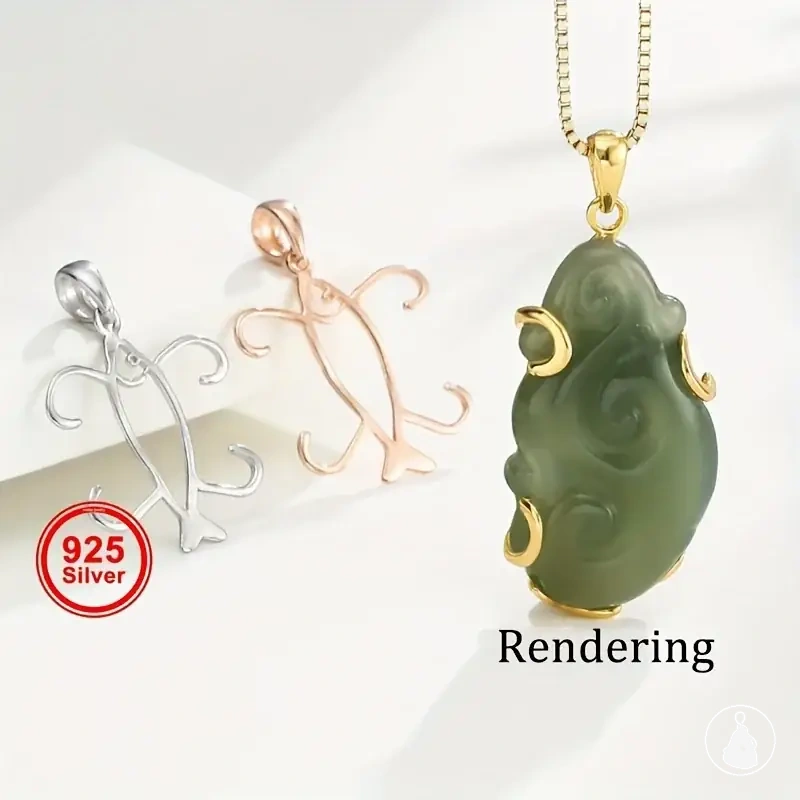
Prong and Claw Settings
A prong setting or claw setting retains sea glass through discrete contact points positioned around its edge rather than continuous perimeter support.
The image shows how separate contacts meet the glass contour while leaving unobstructed glass visible between them.
Edge stability depends on those contact points engaging suitable parts of the contour so their support limits movement within the setting.
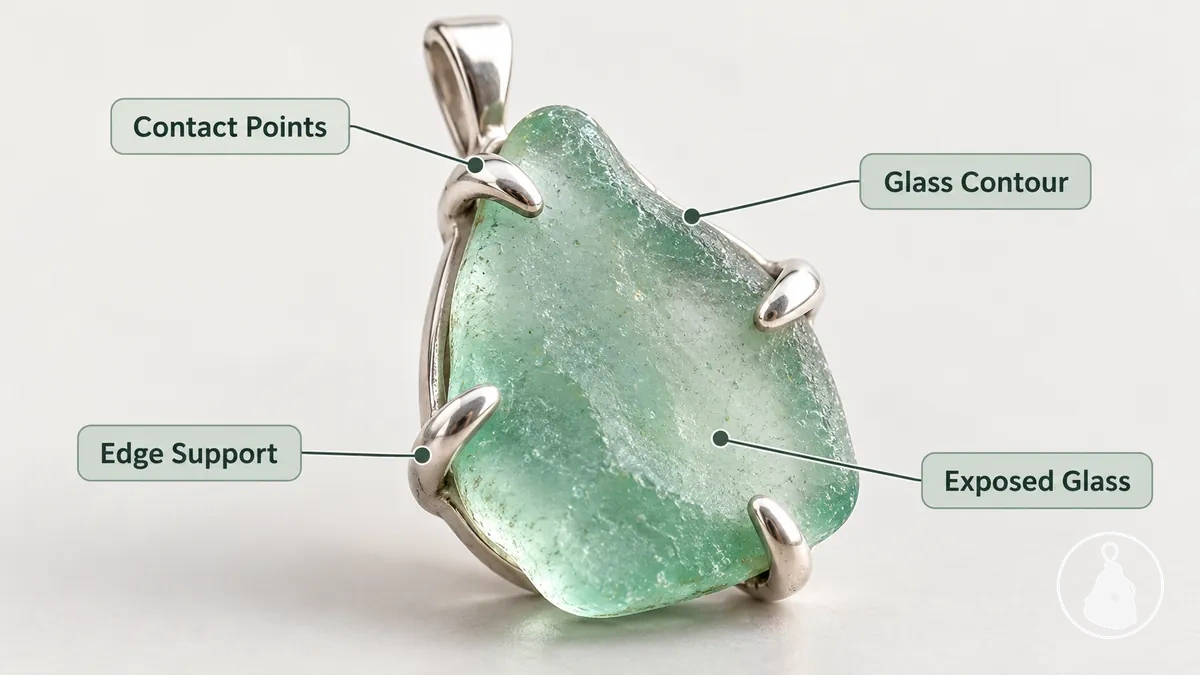
For sea glass with an uneven contour, suitability depends on whether the contact points correspond to stable edge positions and collectively resist the movement available to the piece.
Contact positions that do not support the contour effectively can leave movement risk even when several prongs or claws are present, because retention depends on contact placement and support rather than the presence of contacts alone.
Contact quality and distribution relative to the glass contour therefore provide a more useful retention criterion than assuming a universal number of prongs or claws.
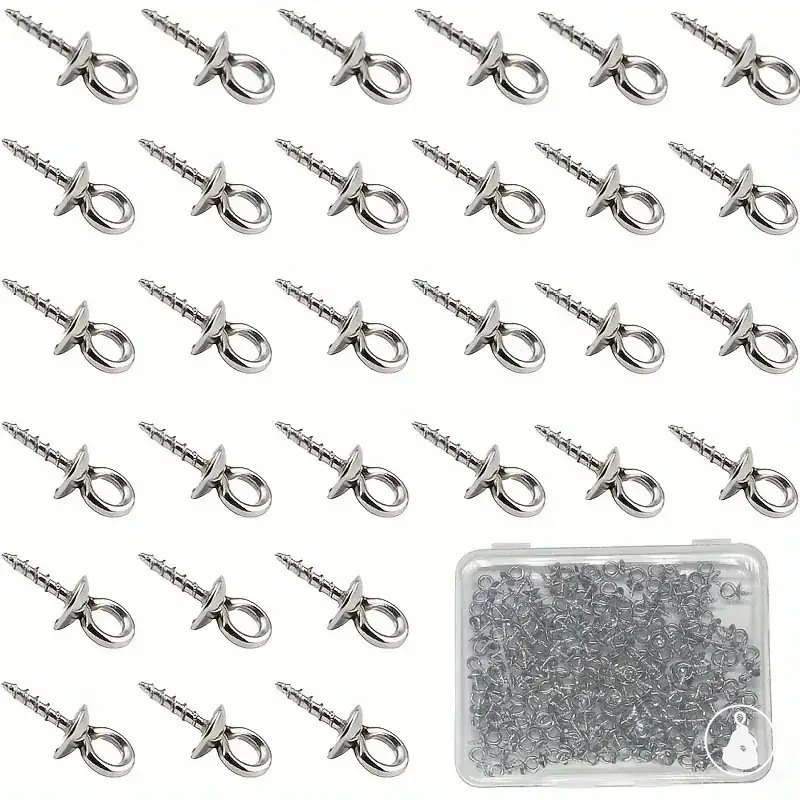
Bail and Cap Attachments
A bail provides a connection point for hanging sea glass, while a cap attachment combines that connection with a seating area that contacts part of the glass rather than retaining it around multiple edges or separate perimeter contact points.
Fit checks for bails and caps
- Contact or seating
- The cap or attachment area must correspond to the part of the glass it actually engages.
- Attachment position
- The position relative to the glass geometry influences the pendant’s hanging direction and balance.
- Bonded designs
- If the design relies on adhesive, the bonded contact area becomes part of the attachment condition; adhesive choice and application remain a separate implementation step.
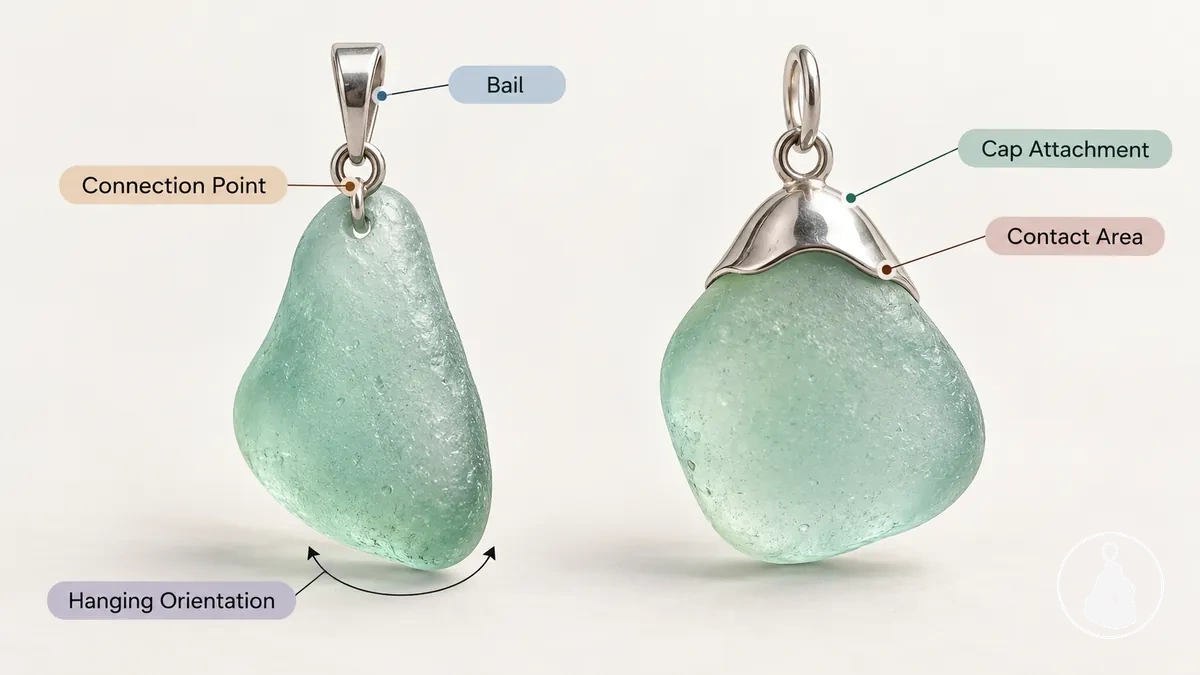
Choose the attachment only when its contact fit and hanging orientation suit the individual sea-glass piece and the attachment method used.
Matching Settings to Sea Glass Shape, Thickness, and Contour
Setting compatibility depends on both the sea glass profile and the setting geometry: the setting's contact requirement must correspond to the piece's shape, thickness, and contour closely enough for the intended fit and retention.
A profile label or nominal size alone does not establish compatibility because pieces with similar outlines can differ in thickness or surface contour.
The main fit checks are sea glass shape, thickness, and contour.
- Shape: The sea glass shape must correspond to the setting geometry where the setting is intended to contact or surround the piece. A regular outline can correspond more continuously with a setting that follows the perimeter, while an uneven outline changes the positions where contact can occur, affecting fit and adjustment demand.
- Thickness: Thickness must be compatible with the setting's seating depth and the locations where its retaining elements contact the glass. Glass that sits differently relative to those intended contact areas changes the contact pattern, which can affect retention and the amount of glass exposed.
- Contour: The glass contour must meet the setting at the intended support or contact areas rather than merely sharing a similar top-view profile. Curvature or an uneven surface can shift contact away from the setting geometry, changing support, fit, and the adjustment required for the individual piece.
The image shows why profile-to-setting compatibility is determined by contact geometry rather than outline alone.
Visible differences in thickness and contour change where sea glass profiles meet the setting's contact areas.
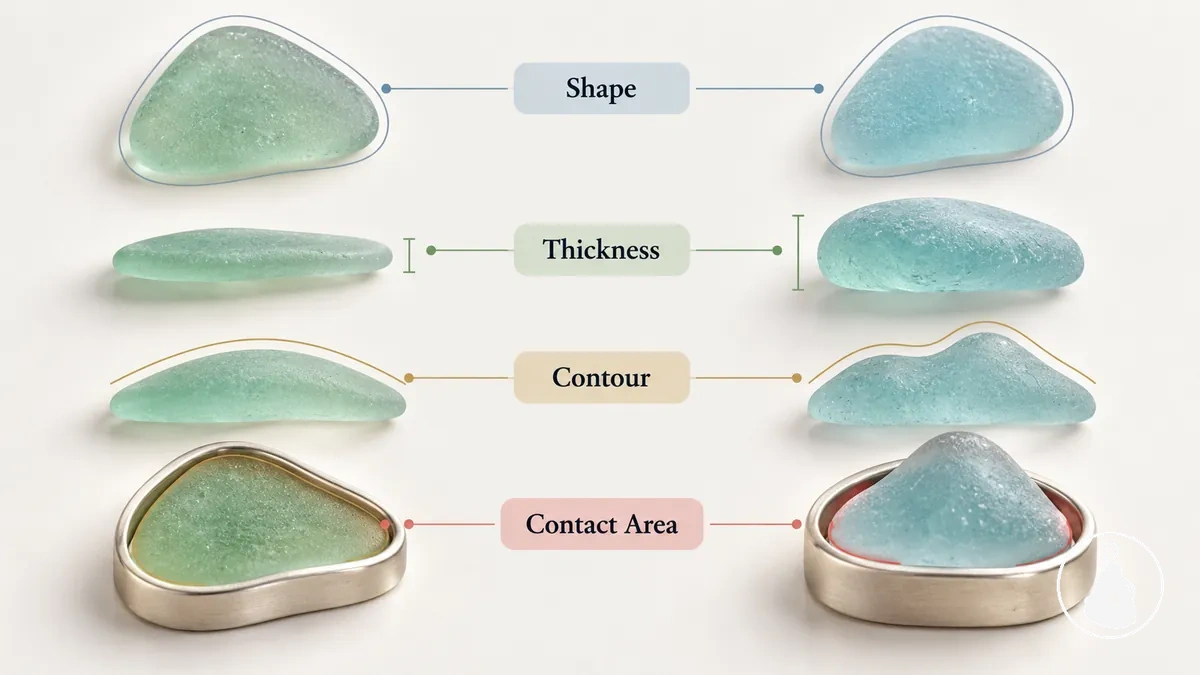
For example, two pieces with a similar nominal shape can differ in compatibility when one has a regular profile and the other has an uneven contour or different thickness, because their contact positions within the same setting geometry are not equivalent.
Nominal size therefore cannot establish fit by itself when thickness, contour, or contact geometry changes how the glass meets the setting.
Compatibility is conditional on the individual piece meeting the candidate setting's contact requirements across shape, thickness, and contour so that the resulting contact pattern supports the intended fit and retention.
Irregular and Uneven Sea Glass
Irregular sea glass requires local fit checks because an uneven surface can create high points and low points that contact a setting differently across the same piece.
Compatibility therefore depends on whether the setting provides stable contact, suitable edge support, and adequate seating without unwanted movement or concentrated pressure.
The following checks organize the contact, seating, and movement conditions that matter before accepting the fit.
- High and low points: Check whether the setting contacts the relevant high points without low points preventing other intended support or seating areas from engaging.
- Edge continuity: Check whether edge continuity provides suitable contact locations for the setting; interruptions or pronounced changes in the edge can leave intended support areas without stable contact.
- Seating depth: Check whether the piece reaches the setting's intended seating depth without a high point holding another required contact area away from the setting.
- Movement: Check for movement or play after the piece is seated; observable movement indicates that the contact pattern is not constraining the glass as intended for retention.
- Concentrated pressure: Check whether contact is concentrated at an isolated high point while other intended support areas remain disengaged, because that condition can indicate an unsuitable contact pattern.
For an uneven piece, incomplete edge support, shallow or uneven seating, isolated contact, or movement identifies a local fit concern rather than prescribing another setting method.
These checks refine the parent compatibility criteria by showing whether the actual contact pattern provides stable contact and seating on the individual piece.
The candidate setting is suitable only when those contact and seating conditions support the intended retention without requiring an unsuitable fit for the irregular sea glass.
Choosing by Security, Glass Exposure, and Setting Effort
Choose a candidate setting only when its fit can support the intended retention; within that constraint, the selection trade-off is among security, glass exposure, and setting effort.
A setting that suits one priority can require a different amount or location of contact, coverage, or adjustment than an option chosen for another priority.
The three selection priorities are security, glass exposure, and setting effort, with physical fit remaining the controlling constraint on suitability.
- Security: Evaluate whether the candidate setting provides stable retention at the contact areas available on the actual piece. Greater coverage or more contact should not be treated as automatically more secure because geometry and workmanship affect how effectively those contacts retain the glass; the trade-off is between the required retention and the coverage or adjustment used to achieve it.
- Glass exposure: Evaluate how much of the glass remains visible after the setting contacts, surrounds, or backs the piece. More backing or edge coverage reduces glass exposure where the setting covers the piece, while more open areas leave more glass visible; either condition is suitable only when the resulting contact pattern also supports the required fit and retention.
- Setting effort: Evaluate the adjustment demand needed to make the candidate setting correspond to the individual glass geometry. A piece that already corresponds closely to the setting geometry can require less adaptation than one with uneven contact conditions; the trade-off is lower adjustment demand versus the additional setting effort needed to establish suitable contact, without assuming that greater effort produces better retention.
For a piece where visible glass is the priority, a setting with more open exposure can be suitable when its contact geometry still supports the required fit and retention; if that condition is not met, exposure does not justify the selection.
For a piece whose geometry requires substantial adjustment to establish stable contact, a candidate with lower adjustment demand can be more suitable when it meets the same retention need, but reduced effort alone does not establish suitability.
The conditional choice is therefore a setting that fits the actual piece while providing the required security, acceptable glass exposure, and acceptable setting effort for the intended priority.
Retention and Resistance to Movement
Stable retention means the candidate setting has contact distribution and seating that support the sea glass without rattle, slip, or uncontrolled movement that indicates ineffective restraint.
Concentrated contact can also create a pressure risk when intended support areas remain disengaged.
After basic fit is established, verify contact, seating, and movement before accepting the retention condition.
- Contact: Check whether contact distribution supports the glass at the intended areas; isolated contact with other support areas disengaged can indicate uneven retention and a concentrated-pressure risk.
- Seating: Check whether the sea glass remains seated against the intended support areas; incomplete or shifting seating can indicate that the candidate setting is not supporting the piece as intended.
- Movement: Check for rattle, slip, or movement after seating; when these observations result from gaps or ineffective contact, they can indicate insufficient restraint within the candidate fit.
If rattle, slip, poor seating, or concentrated contact appears during verification, reassess the contact condition because the candidate setting may not provide suitable mechanical retention in its current fit.
Mechanical retention concerns how the setting physically holds the piece, while bonded attachment with adhesive uses a different retention mechanism and falls outside this verification check.
Accept the fit when contact distribution and seating provide the intended retention without problematic movement; otherwise, adjust or reject the fit according to the specific contact condition.
Glass Exposure and Reversibility
Glass exposure is determined by setting architecture: backing covers the back face where it overlaps the glass, while edge coverage and other contact area reduce the visible glass surface where they contact the piece.
Exposure versus support
More open architecture: less backing and less occupied contact area can leave more glass visible, but only if the remaining support still retains the piece securely.
More coverage: backing or greater edge coverage occupies more of the visible glass area while providing a different support and presentation pattern.
For front-and-back presentation, an open-back arrangement is suitable only when its contact pattern and hanging orientation keep both faces accessible and presentable; open-back construction alone does not guarantee reversibility.
Setting Complexity and Adjustment
Adjustment demand matters only after a candidate setting can achieve suitable fit and retention. A closer pre-fit match generally needs less custom fitting; greater mismatch between glass and setting geometry increases the amount of controlled adjustment needed.
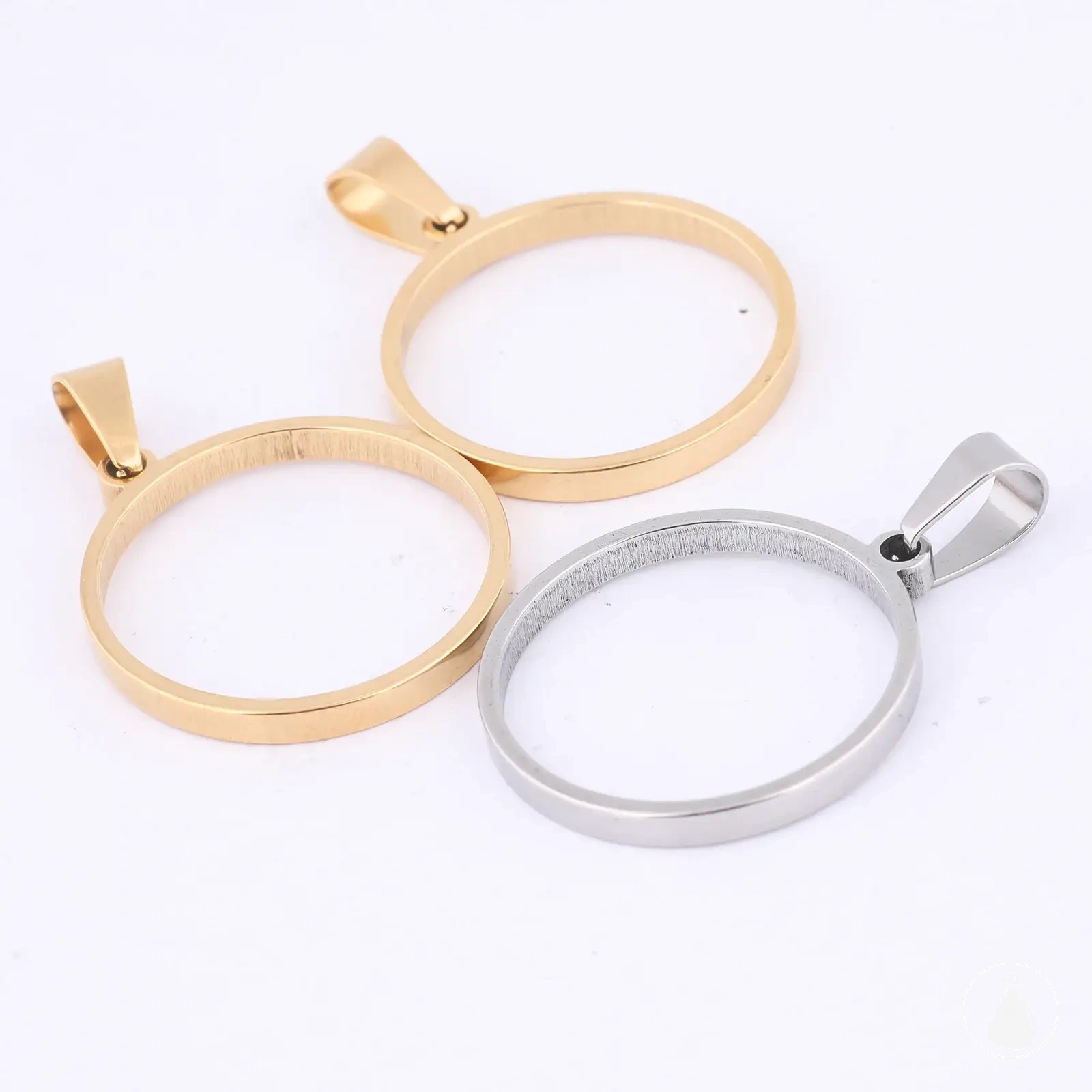
The listings below are illustrative examples for comparing setting types. Before following a product link, verify the listing’s dimensions and contact geometry against your piece, then confirm the required retention, glass exposure, and adjustment effort.