Sea Glass Jewelry Making Tools for a Starter Setup
For a beginner, choose sea glass jewelry-making tools by method: pliers and wire cutters for wire work, a rotary tool with compatible diamond drill bits when the design requires drilled glass, and hand tools matched to the chosen setting for other no-drill construction. Start with the smallest reusable tool set that covers the required tasks, then add specialised or convenience tools only when the method creates a clear need.
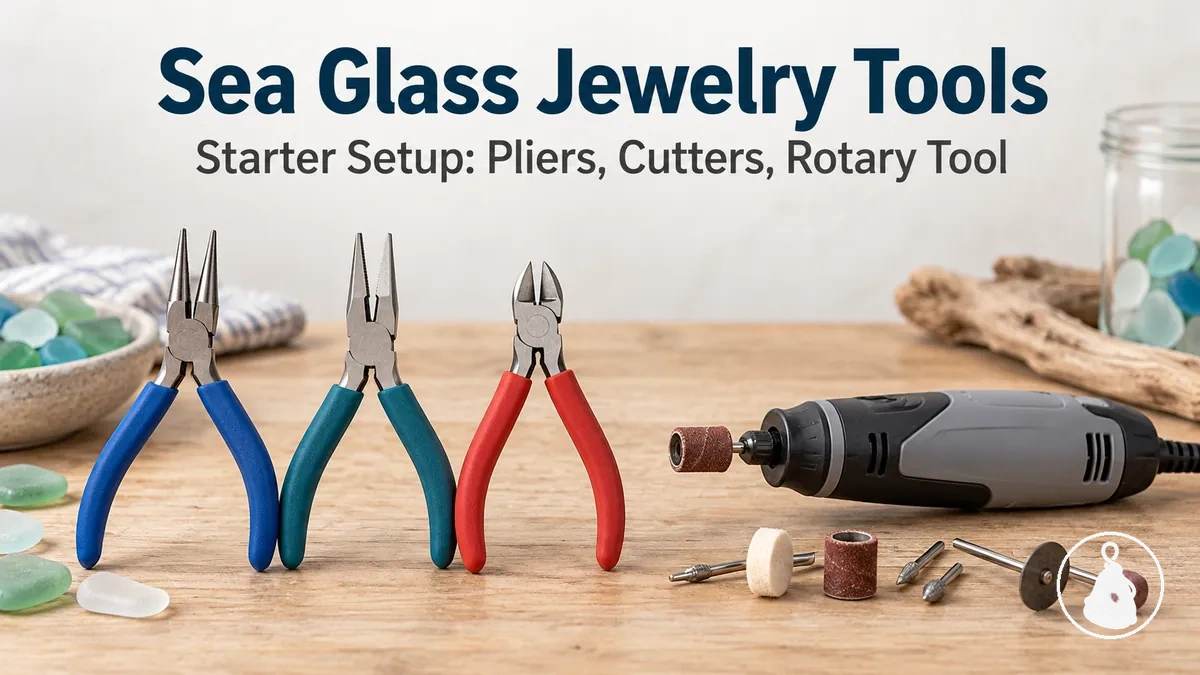
Choose your starter tool profile by making method
Select the method you plan to use. The result identifies the core reusable tool profile and the compatibility check that matters most; it does not rank sellers or assume a current marketplace offer.
Starter profileChoose a method to see the core tool profile.
Check firstTool requirements follow the task created by the method.
Add laterOnly add a tool when it performs a required or repeatedly useful task.
This page focuses on reusable tools. Consumable materials such as wire, abrasives, adhesives and findings are separate because they are used up or incorporated into the finished piece.
Table of Contents
Essential Versus Optional Tools for a Beginner Starter Setup
A beginner starter setup has three layers: core tools for the chosen construction task, method-specific tools required only by certain methods, and optional tools that mainly improve convenience or workflow.
- Essential: Jewelry pliers — core hand tools when the intended method involves forming, gripping, or manipulating jewelry wire or findings; include them in a wire-based starter setup.
- Essential: Wire cutters — core tools when the chosen work requires cutting jewelry wire; include them when wire is part of the construction method.
- Conditional by Method: Rotary tool — a drilling tool rather than a universal requirement; add one when the chosen design requires drilled sea glass.
- Conditional by Method: Diamond drill bits — drilling accessories used with a compatible rotary-tool setup; add them with the drilling method rather than to a non-drilling tool set.
- Conditional by Method: Holding aid — useful when the chosen task requires the workpiece to be held or positioned with more control; include one when that task calls for controlled positioning.
- Optional/Convenience: Tool organiser — keeps reusable hand tools together but does not perform a jewelry-making task, so it can remain optional unless organised storage is useful.
- Optional/Convenience: Additional specialised hand tools — add these when a repeated task creates a clear need that the core tools do not cover efficiently.
A rotary tool and compatible diamond drill bits become necessary when the design requires drilled glass, while pliers and wire cutters become core tools when the construction method uses jewelry wire. A tool with no current task can remain optional.

Selection rule: build the starter set around required capability, not item count. Add convenience or specialised tools after the current method exposes a specific need.
Choose Tool Requirements by Jewelry-Making Method
Choose the making method before buying specialised tools. Drilling, wire wrapping and setting-oriented work create different reusable-tool requirements, so each category should be justified by the task it performs.
| Method | Core tool categories | Conditional additions | Selection implication |
|---|---|---|---|
| Drilling | Rotary tool and diamond drill bits | Support or holding tools when the setup requires controlled positioning | Select drilling equipment when the design requires a hole in the sea glass; a no-drill path does not require this tool category. |
| Wire wrapping | Pliers and wire cutters | Additional hand tools when a specific wire task requires another type of gripping, forming, or cutting control | Prioritise hand tools that match the intended wire tasks rather than adding drilling equipment to an undrilled design. |
| Setting-oriented/no-drill | Hand tools suited to the chosen setting approach | Specialized setting tools when the selected setting requires them | Match the tool category to the setting method instead of assuming that drilling or wire-wrapping tools belong in the setup. |
The image maps the shared and method-specific tool categories without implying that every setup needs every tool.
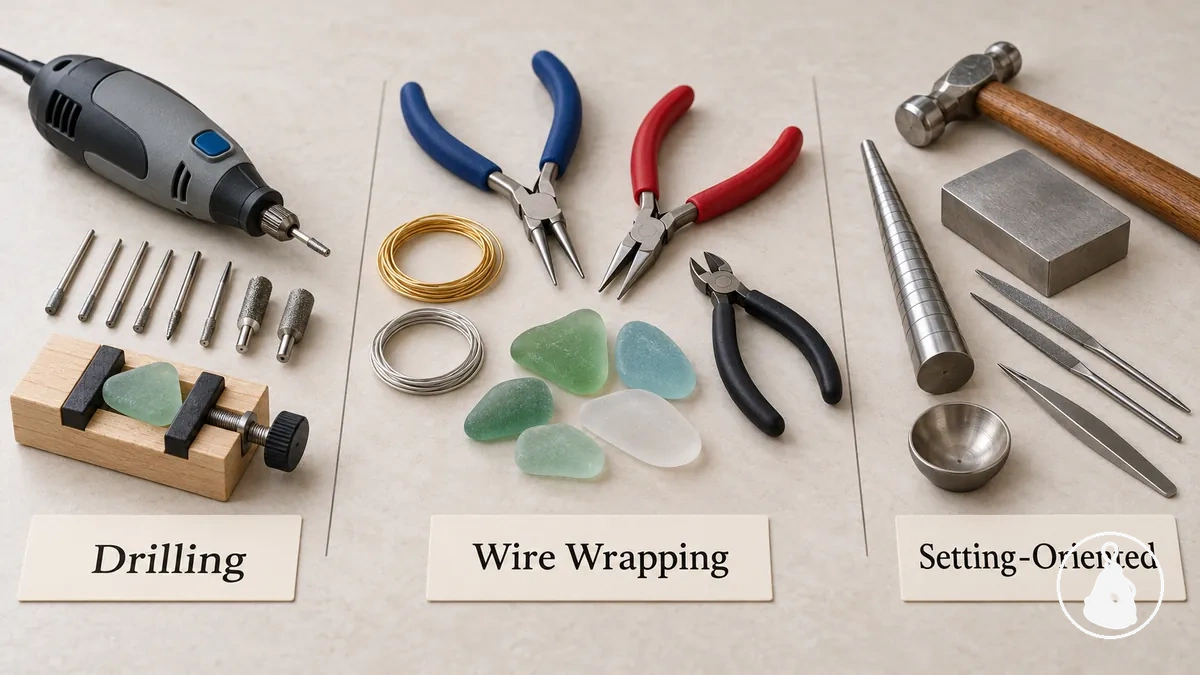
A wire-based no-drill design can remain a compact hand-tool setup; a drilled design legitimately adds a rotary tool, compatible diamond drill bits and stable support when the workpiece needs it.
Choose Jewelry Pliers and Cutters for Precision and Control
Choose jewelry pliers and wire cutters by function, contact surface and control for the intended wire task rather than by the number of tools in a set. For beginners, the main selection attributes are jaw finish, nose geometry, comfort, leverage, cut quality and cutter capacity.
- Function: Match jewelry pliers or wire cutters to the intended gripping, forming, positioning, or cutting task.
- Jaw finish: Choose smooth jaws when the wire needs a non-serrated contact surface to reduce the risk of tooth impressions during gripping.
- Nose geometry: Match the nose shape to the required contact area and gripping or forming task rather than assuming one profile suits every task.
- Comfort and control: Check that the handles provide a stable grip and allow controlled hand pressure for the intended work.
- Leverage: Choose a tool that provides suitable mechanical advantage for the task without relying on extra hand force to compensate for an unsuitable tool.
- Cut quality: Match the wire cutters and their cutting faces to the type of cut required for the work.
- Wire capacity: Check the cutter manufacturer's stated capacity for the size and hardness of the intended wire because capacity is specific to the cutter rather than a single limit shared by all jewelry cutters.
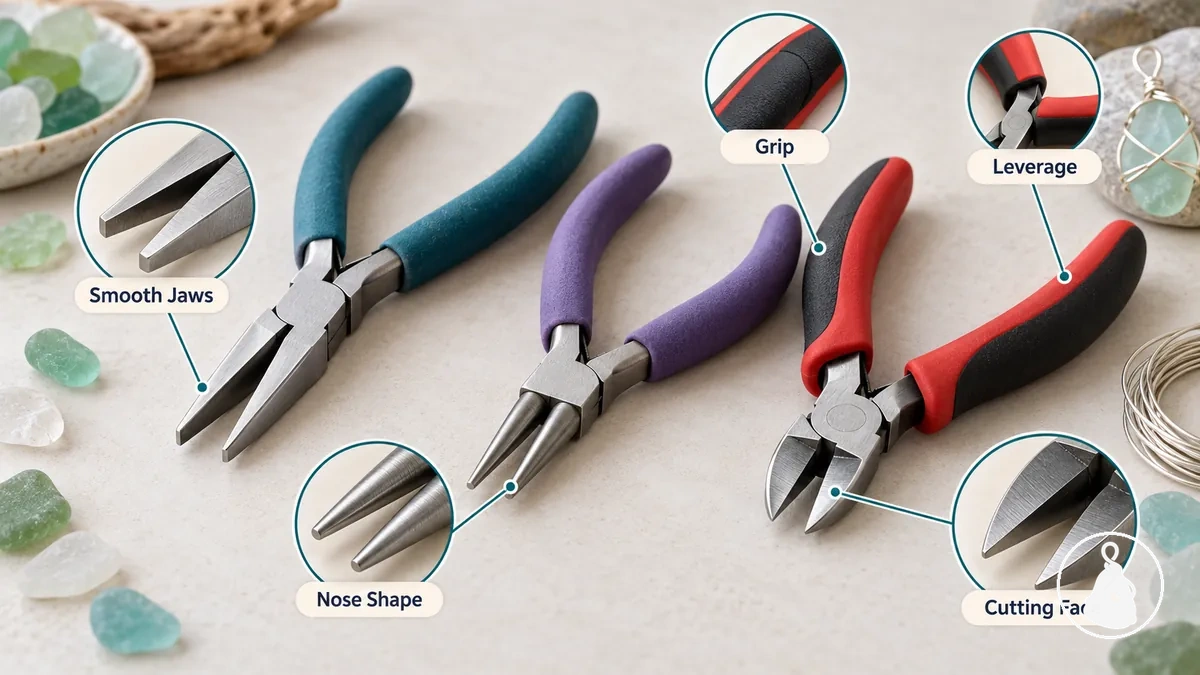
The highest-value checks are a controlled grip, task-appropriate nose shape, a jaw surface suited to the desired finish, and wire-cutter capacity matched to the material and thickness being cut.
Jewelry Pliers: Smooth Jaws, Nose Shape, and Handling Control
Jewelry pliers should be selected by jaw surface and nose shape because these features change grip, access, bending control and the risk of marking wire.
Match the jaw surface and nose geometry to the intended task; the image provides a close view of those contact differences.
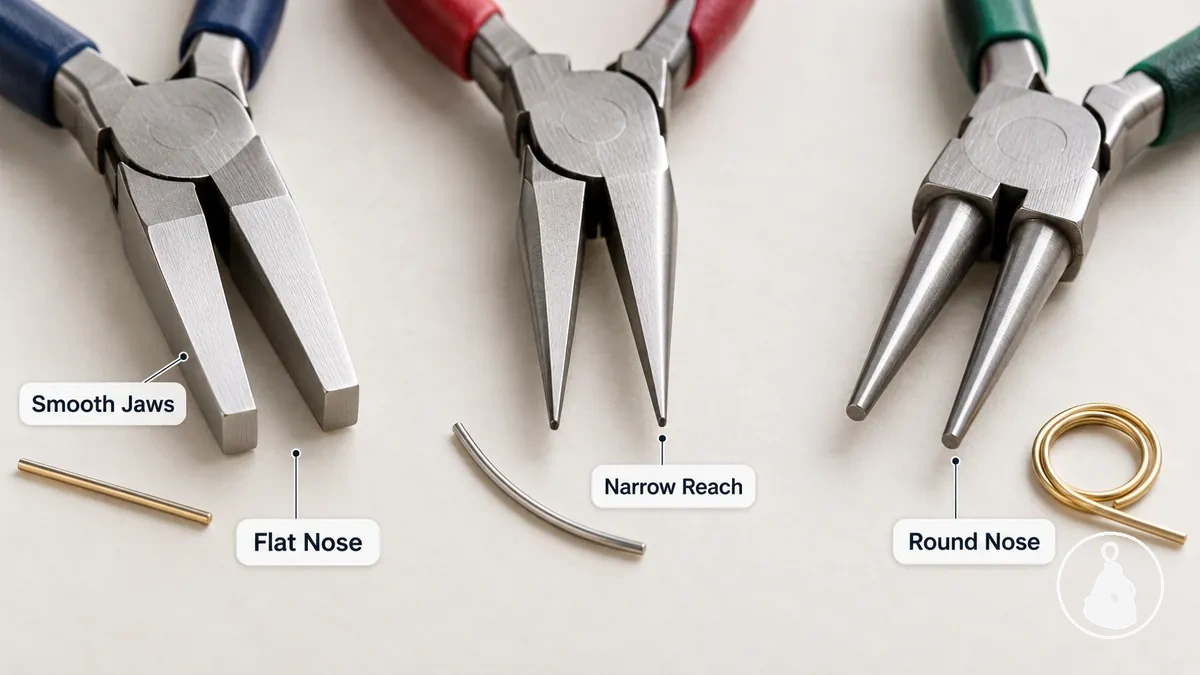
- Smooth jaw surface
- Provides non-serrated contact and reduces the risk of tooth impressions, although handling pressure can still mark softer wire.
- Flat-nose pliers
- Broad, flat jaw surfaces suit holding and bending tasks where a wider contact area is useful.
- Chain- or needle-nose pliers
- A narrower profile improves access and positioning where space is limited.
- Round-nose pliers
- Rounded, tapered jaws suit forming curves and loops rather than broad flat gripping.
No single nose shape is best for every wire task. Choose the geometry that provides the required contact area, access and forming control.
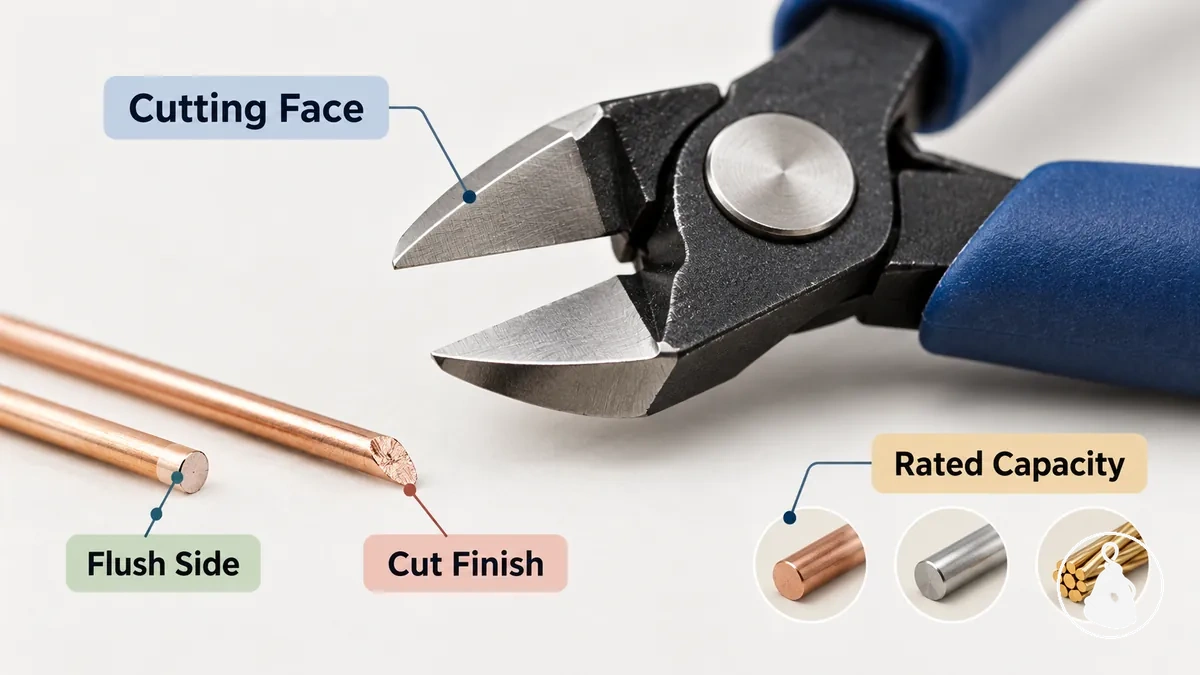
Wire Cutters: Flush Cuts and Wire Capacity
Wire cutters should be selected by cutting-face geometry and rated wire capacity because both affect cut quality, handling control and tool wear.
Flush cutters are designed to leave one side of the cut closer to flush, but the actual finish still depends on cutter design, wire material, thickness and tool condition. Capacity is cutter-specific, so use the stated material and size rating rather than assuming a universal wire limit.
Choose Rotary Tools and Diamond Bits for Drilling Sea Glass
Choose the rotary tool, bit-holding system, diamond drill bit and workpiece support as one compatible drilling setup rather than selecting the powered tool by nominal power alone.
The main checks are secure chuck or collet fit for the bit shank, controllable operation, bit type and diameter matched to the intended hole, a serviceable diamond-coated cutting surface, and stable support suited to the sea glass.
| Component | Selection attribute | Condition to check | Decision effect |
|---|---|---|---|
| Rotary tool | Speed control and handling | The tool provides controllable operation for the selected bit and intended hole. | Suitable control supports precision; greater capability alone does not correct an incompatible bit or unstable setup. |
| Bit-holding fit | Chuck or collet compatibility | The chuck or collet accepts and securely holds the selected bit shank. | Correct bit fit provides a stable tool-to-bit connection; incompatible fit makes that tool-and-bit combination unsuitable. |
| Diamond drill bit | Diamond-coated cutting surface and condition | The bit is intended for glass and its cutting surface remains serviceable rather than excessively worn. | A suitable, serviceable bit supports effective cutting; wear can reduce cutting effectiveness and change handling demands. |
| Bit size/type | Intended hole requirement | The selected bit size and construction suit the intended hole and the available area of the sea glass. | The required hole and workpiece condition determine the appropriate bit choice, so no single bit size applies to every piece. |
| Workpiece support | Stable support | The sea glass can be held steadily in a position suited to its shape and condition. | Stable support improves handling control; unstable support can increase movement and may increase breakage risk during drilling. |
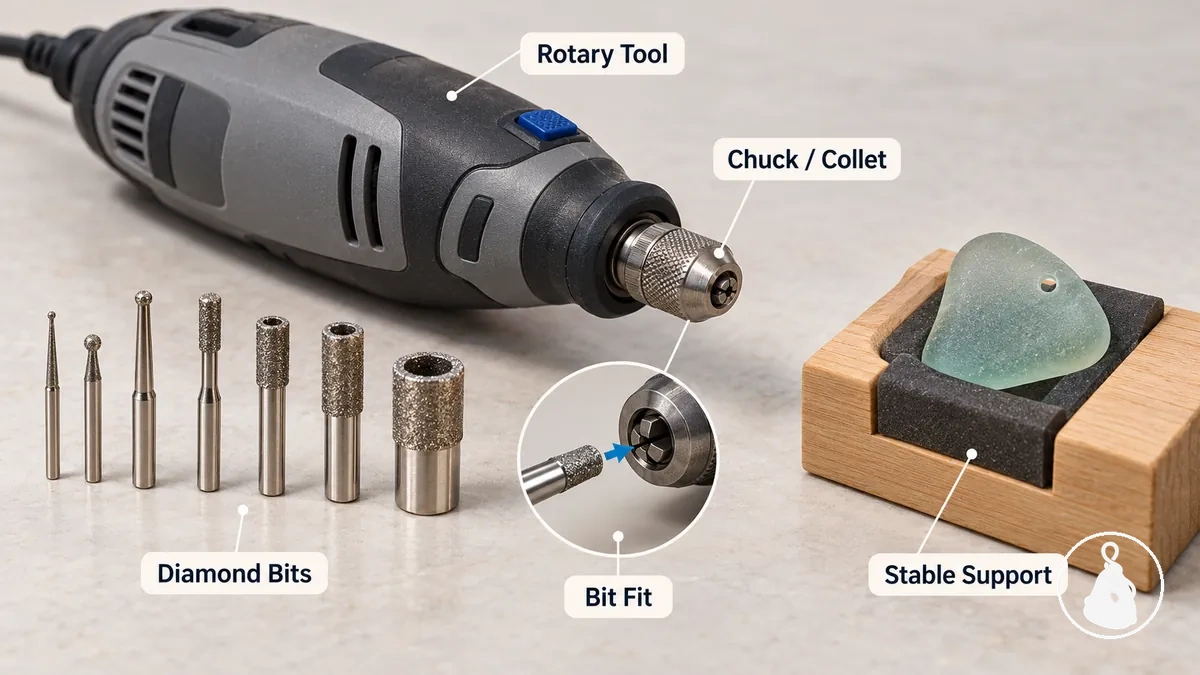
This section covers component selection, not drilling speed, cooling, pressure or hole-making technique. For selection, reject any tool-and-bit combination whose fit or controllability cannot be confirmed.
Rotary Tools: Bit Fit, Control, and Durability
A rotary tool should provide secure bit fit and controllable handling rather than being selected by nominal power alone.
- Bit fit
- The chuck or collet must accept and securely hold the selected bit shank; if the interface cannot be confirmed, do not assume compatibility.
- Speed control
- The tool should allow controllable operation for the intended task; a higher maximum speed is not a substitute for usable control.
- Balance and handling
- The tool should be steady enough for precise handling in the expected working position.
- Durability
- Judge durability against expected use, tool condition and duty pattern rather than inferring it from price or power alone.
If secure bit fit or adequate control cannot be confirmed, treat that rotary-tool and bit combination as unsuitable until compatibility is verified.
Diamond Drill Bits: Type, Size, and Wear
Diamond drill bits for sea glass should be selected by construction, diameter, intended hole, glass condition and wear rather than treating one bit type as universally superior.
| Bit type or condition | Diameter/fit consideration | Glass or hole condition | Selection trade-off |
|---|---|---|---|
| Solid-ended diamond-coated bit | Choose the diameter for the intended hole and confirm that the bit shank fits the rotary tool's chuck or collet. | Use a bit specified for glass when the sea-glass piece has enough usable area around the intended hole. | A smaller matched diameter can suit jewelry-scale holes; increasing diameter is not automatically an improvement. |
| Diamond core bit | Choose a core diameter that matches the intended hole and confirm tool-to-shank compatibility. | The hollow core-style construction can suit glass when its diameter and the available area of the piece fit the intended hole. | Core style is an alternative construction, not a universal upgrade; choose it for the required hole and workpiece condition. |
| Worn diamond-coated bit | Correct diameter and fit are no longer enough when the cutting surface is materially worn. | Reduced cutting effectiveness or visibly degraded coating is a condition for reassessing continued use. | Bit condition can override otherwise correct type and size; replace a worn bit rather than compensating by forcing the tool. |
Service life should not be reduced to a fixed use count: bit construction, glass condition, operating conditions and wear all affect whether the cutting surface remains fit for the next piece.
Holding Aids: Stable Support Without Damaging the Glass
A holding aid should give sea glass stable support while preserving workpiece access and limiting concentrated pressure. Because shape, thickness and contact area vary from piece to piece, the correct support condition is workpiece-specific rather than a universal pressure value.
- Stability
- The support should keep the individual sea-glass piece steady without relying on excessive clamping force.
- Contact surface
- A softer or suitably broad contact area can limit concentrated pressure on the glass.
- Workpiece access
- The holding position should leave the intended work area accessible while maintaining stable support.
- Adjustment
- The support should adapt to the piece's shape and thickness; thin, curved or irregular glass may need different contact points.
Greater clamping force is not automatically better. Use enough support to keep the piece stable while preserving suitable contact and access.
Tool Kits Versus Individual Tools for Beginners
A tool kit offers convenience and completeness in one purchase, while individual tools offer closer control over relevance, quality, replacement and upgrades. The better format is the one that covers the required functions with fewer irrelevant inclusions.
| Purchase format | Beginner advantages | Common trade-offs | Better fit when |
|---|---|---|---|
| Tool kit | Provides several tools together, improving completeness and purchase convenience when the included functions match the chosen method. | Some inclusions may be unnecessary tools for the intended method, and quality consistency must be checked across the included tools rather than assumed from the set as a whole. | Most included tools have clear roles in the chosen method and the beginner values completeness and one-purchase convenience. |
| Individual tools | Allows closer control over tool relevance, individual quality requirements, replacement flexibility, and the upgrade path. | Each required function must be identified separately, so the beginner must confirm that the assembled tools cover the intended tasks. | The chosen method requires a focused set of functions, or separate replacement and upgrading are more useful than the completeness of a kit. |
Choose a compact kit when most included tools have clear roles in the chosen method; choose individual tools when only a few specific functions are needed or separate replacement and upgrading matter more than one-purchase convenience.
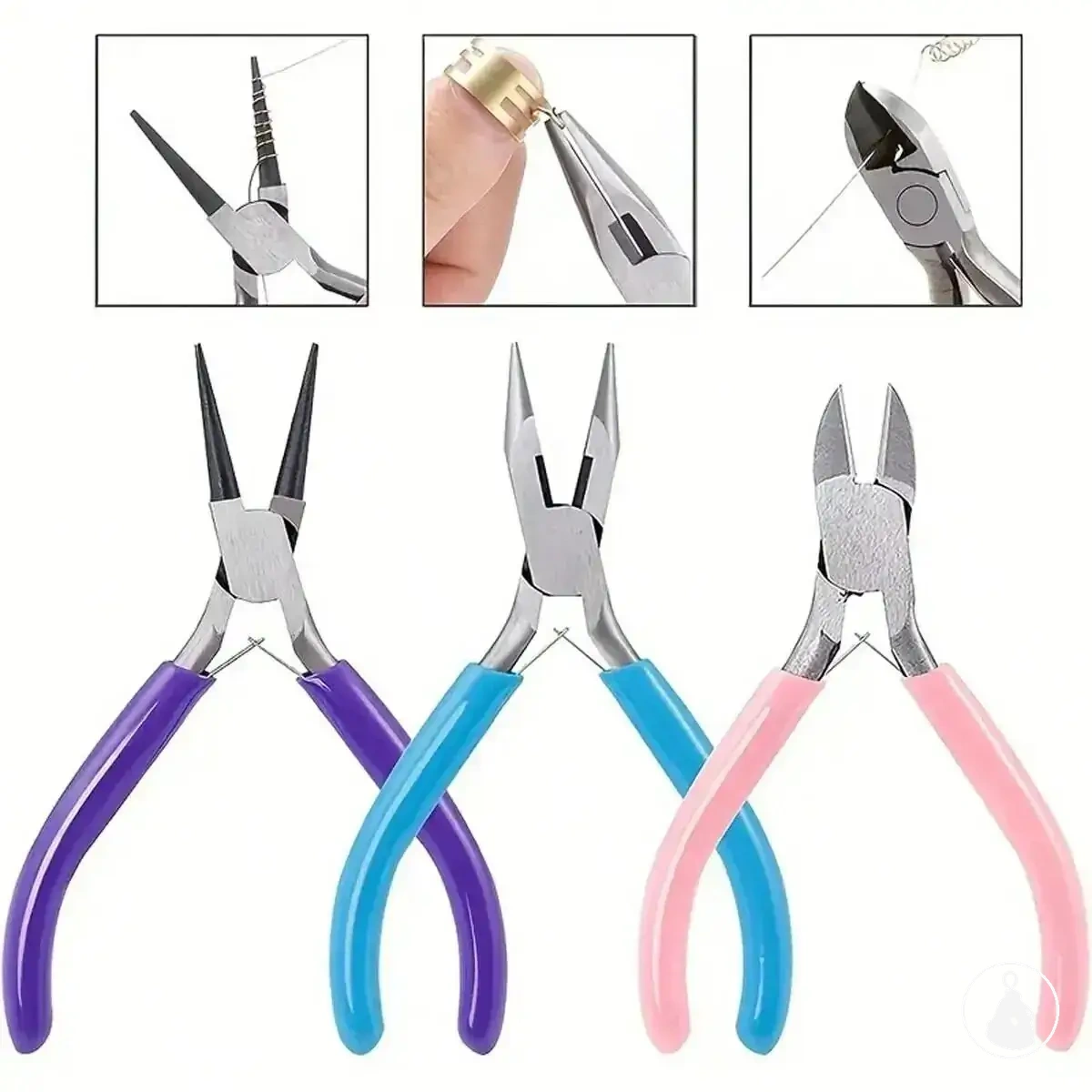
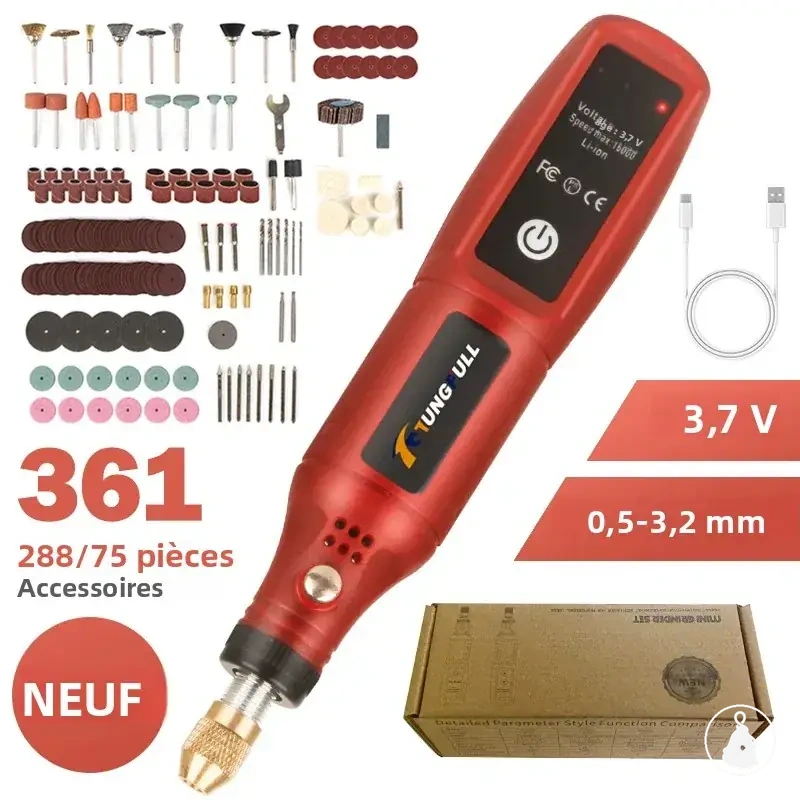
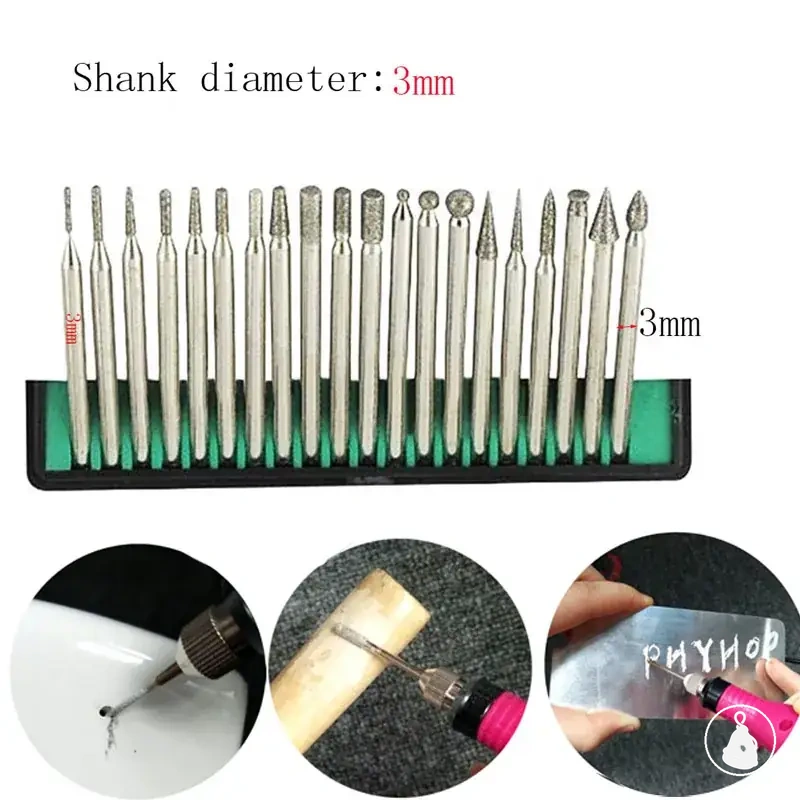
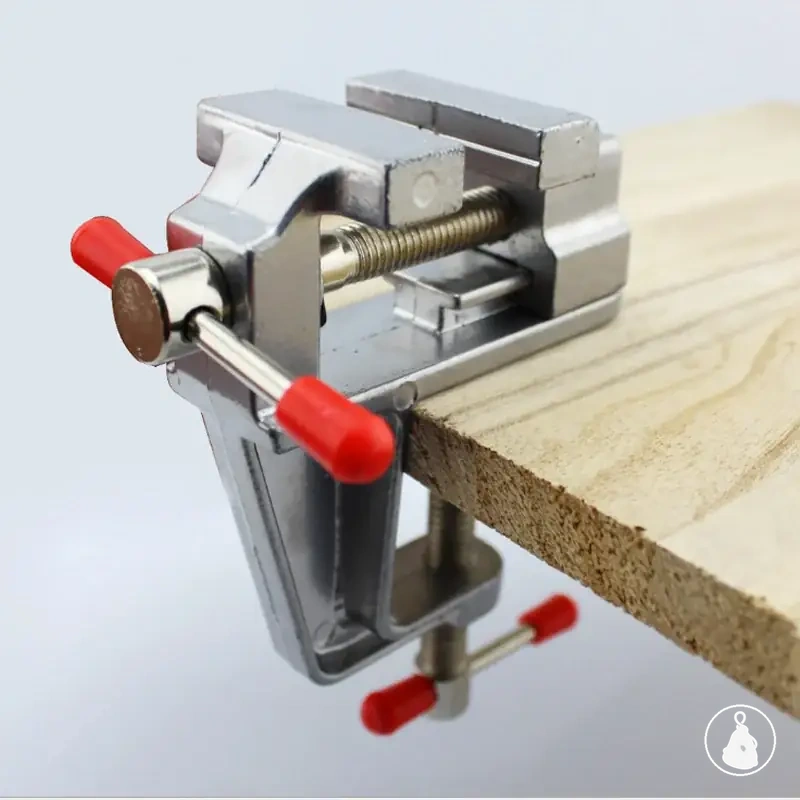
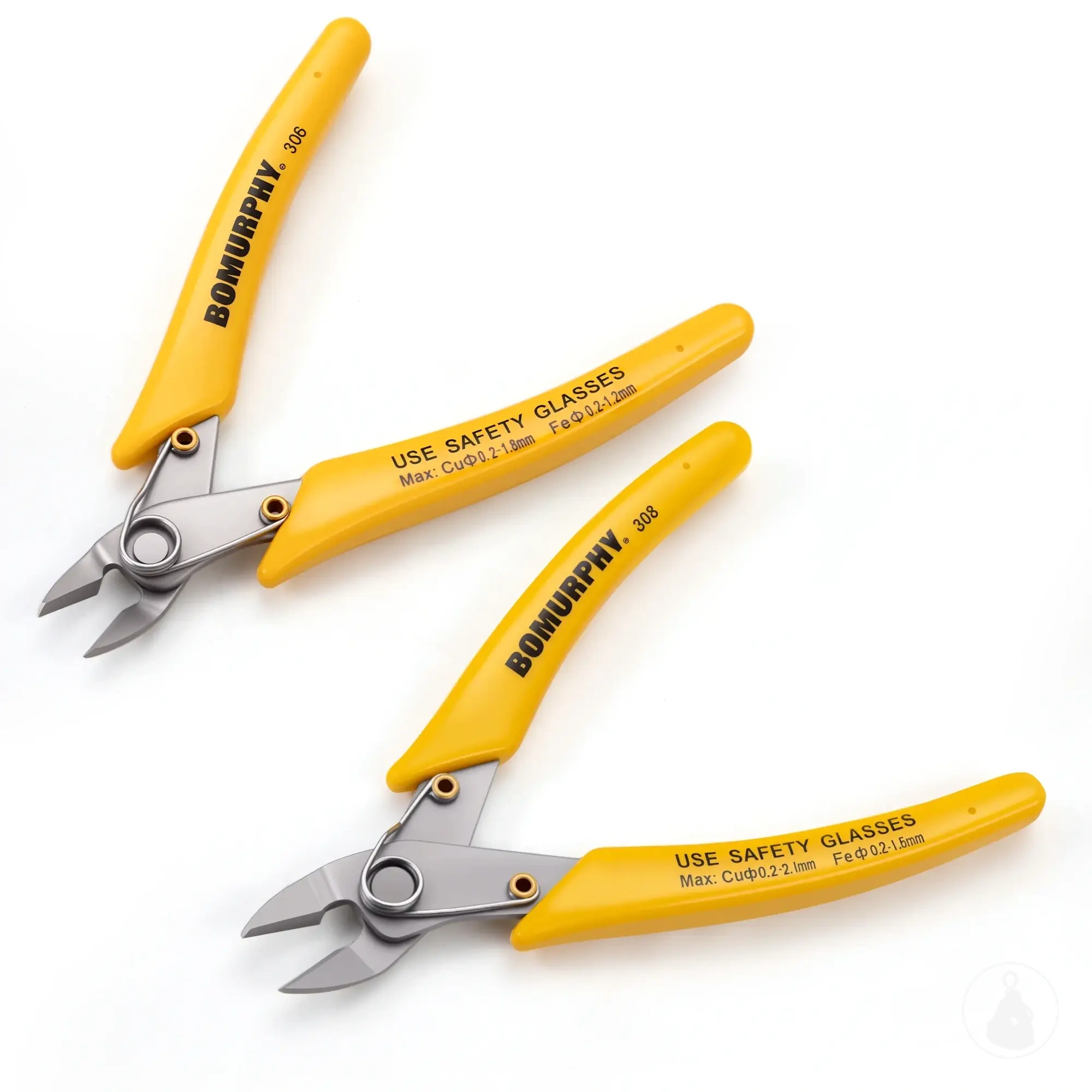
The product cards below are examples for comparing tool types and accessories; they are not a pre-matched starter kit.
Verify each listing's actual function, accessory fit and stated capacity against your method before following an option. Do not assume a diamond rotary burr set is equivalent to a diamond drill-bit set for making holes.
Starter Tool Quality and Budget Priorities
A starter-tool budget should prioritise tools where control, frequent use, compatibility, durability and replacement risk have the greatest effect on the work. There is no useful universal spending threshold across different methods and tool categories.
| Tool category | Quality attribute to prioritize | When a basic option may be sufficient | Upgrade trigger |
|---|---|---|---|
| Frequently used hand tools | Precision, comfortable control, and durability during repeated use | The tool performs its required gripping, forming, or cutting function with suitable control and no use-related limitation that affects the intended task. | Frequent use exposes poor control, discomfort, premature wear, or a required function that the current tool cannot perform adequately. |
| Method-specific powered tools | Compatibility, controllability, and durability for the intended specialized task | An entry-level tool may be sufficient when it is compatible with the required accessories and provides suitable control for the expected use. | The chosen method requires capability the current tool lacks, or frequent use exposes a durability or control limitation. |
| Specialized hand tools | Task fit and control for the specific function | A specialized tool can wait while the current tools perform the required tasks with suitable control. | A repeated task creates a clear need for different access, geometry, function, or handling control. |
| Convenience and organisation tools | Practical usefulness for the actual workflow | Existing storage or workspace arrangements remain sufficient while they support the required work without a demonstrated limitation. | Repeated use reveals a specific organisation, access, or handling problem that affects the workflow. |
Keep an entry-level tool while it performs the required function with suitable control and compatibility. Move an upgrade forward only when repeated use or a method requirement exposes a specific limitation.
Higher price alone does not establish greater value. Value comes from how well the tool meets the required task under the expected use conditions.