Sea glass jewelry making starts by matching the attachment method to the piece’s
shape, thickness, surface condition, and intended jewelry form. Use a drilled connection
when the glass is sound and can accept a hole with adequate surrounding material; use
wire wrapping, a compatible setting, or an adhesive-mounted finding when a no-drill
holding method better fits the glass and design.
Choose the attachment path from the glass first
Compare the piece’s condition and geometry with the holding mechanism each method requires.
The method then determines the tools, materials, and jewelry findings you need.
1. Can the piece safely accommodate a hole?2. Can its shape be mechanically captured?3. Does a setting or finding fit the intended jewelry form?
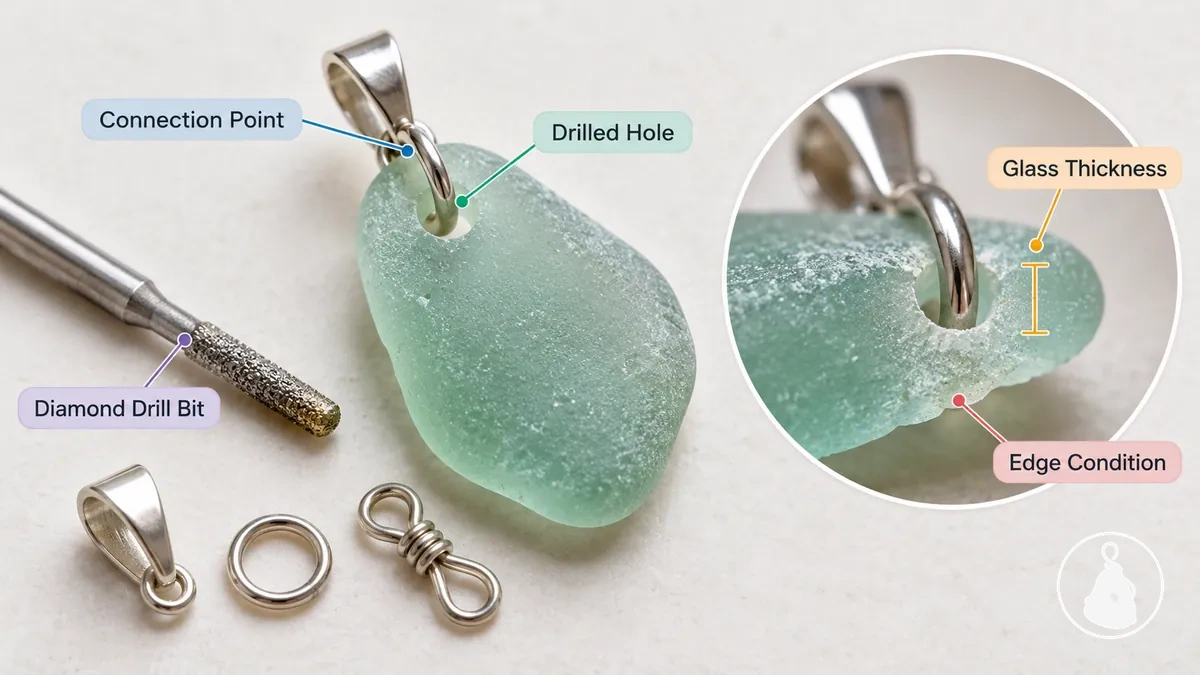
Drilled connection
Good fit when
The piece is sound and has enough material around the intended hole position.
Holding mechanism
A bail, jump ring, wire, or similar finding connects through the drilled hole.
Method-specific need
Drilling equipment with a diamond drill bit, plus the chosen connection finding.
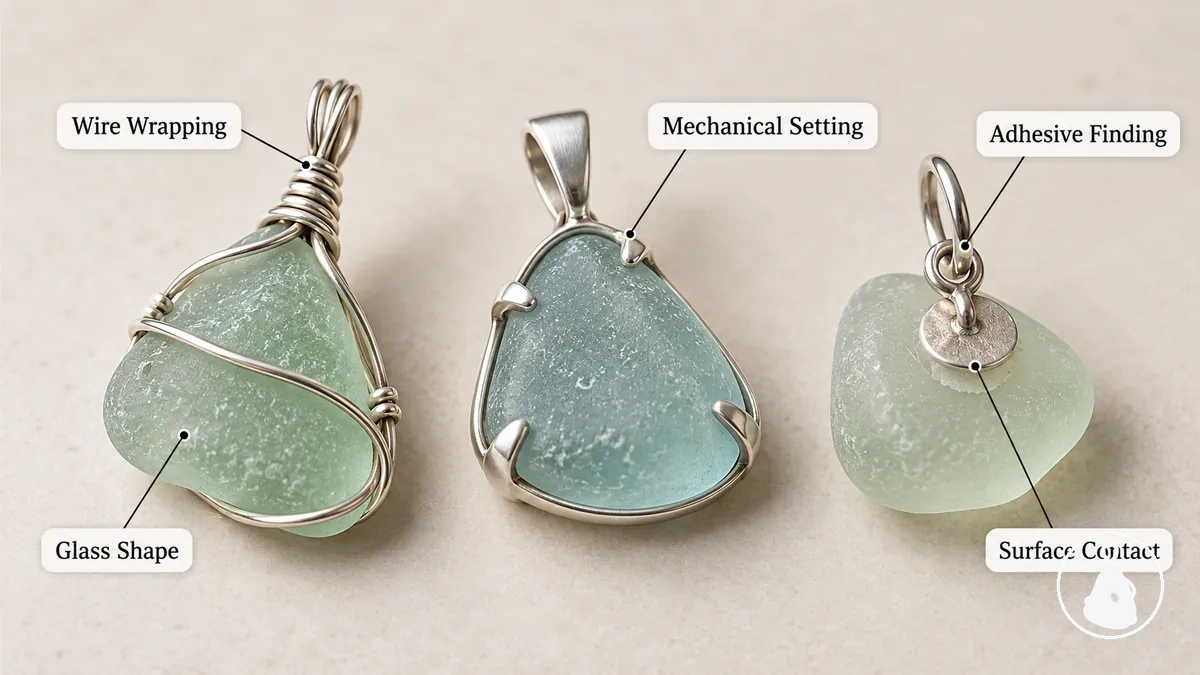
Wire wrapping
Good fit when
The contours allow wire to capture the piece securely without drilling.
Holding mechanism
Jewelry wire surrounds and restrains the sea glass.
Method-specific need
Wire, pliers, cutters, and any findings needed for the wearable connection.
Setting or mechanical holder
Good fit when
The glass shape and dimensions match the holder’s capture geometry.
Holding mechanism
The setting physically retains the sea glass without a drilled hole.
Method-specific need
A compatible setting and the hand tools required for its assembly.
Adhesive-mounted finding
Good fit when
The glass and finding provide sufficient mating surface for the intended bond.
Holding mechanism
A jewelry-suitable adhesive joins the finding to the sea-glass surface.
Method-specific need
A compatible finding and an adhesive suitable for both materials.
Decision rule: visible flaws, edge weakness, or too little material around a proposed
hole point favour a no-drill method whose holding mechanism matches the piece.
Table of Contents⌄
What Sea Glass Jewelry Making Involves
Sea glass jewelry making is the preparation of suitable sea glass and the securing of it with jewelry-making materials or findings so it can function as wearable jewelry.
A prepared piece can become part of a necklace, earring, ring, or bracelet when its attachment method connects or holds the glass in the intended jewelry form.
Drilling, wire wrapping, settings, and adhesive-based attachment are alternative paths for making that connection rather than requirements that every piece must use.
Three parts have to work together
Prepared sea glass
Its shape, thickness, edges, and surface condition constrain which attachment methods are practical.
Attachment mechanism
Drilling, wire wrapping, a setting, or an adhesive-mounted finding provides the physical hold or connection.
Wearable connection
A bail, jump ring, chain, cord, or other compatible finding connects the secured glass to the intended jewelry form.
How Sea Glass Is Attached in Jewelry Making
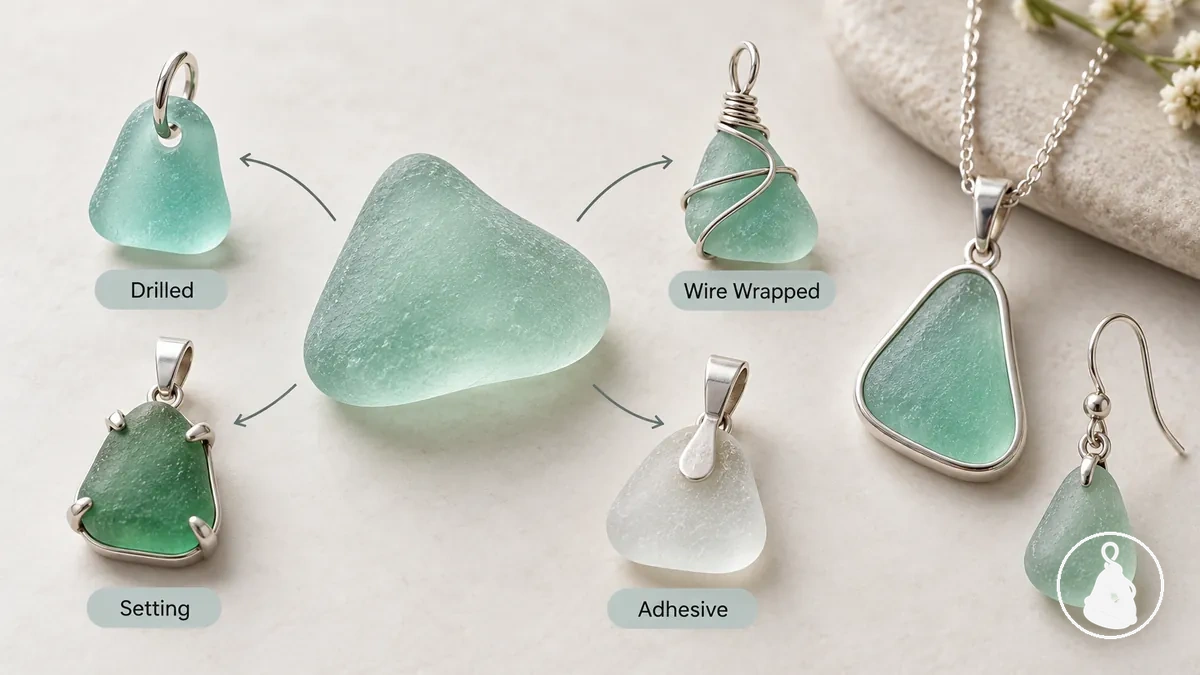
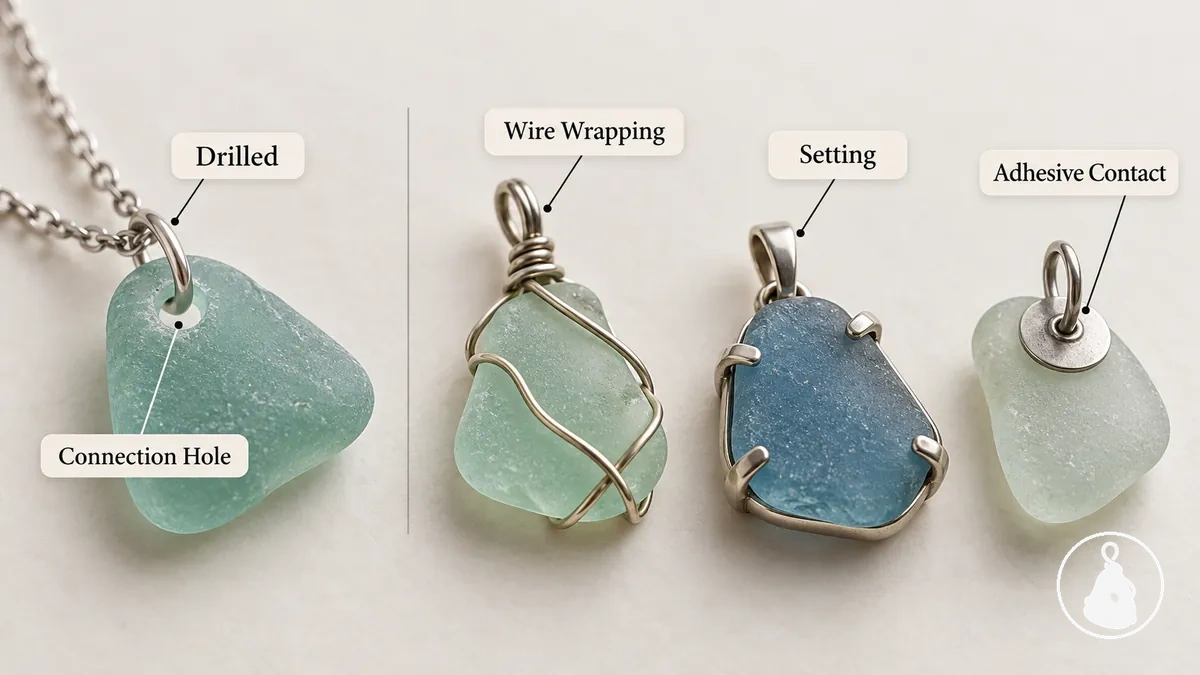
Sea glass is attached in jewelry making through either a drilled or no-drill attachment method.
A drilled attachment creates a hole for a jump ring, bail, wire, or similar finding; no-drill approaches secure the glass through wire wrapping, a setting or mechanical holder, or an adhesive-mounted finding.
Choose between them from the individual piece’s shape, thickness, edge condition, visible flaws, and intended jewelry form, because these attributes determine whether a hole or another holding mechanism is practical.
A drilled attachment provides a defined connection point but introduces breakage risk while the hole is made. A no-drill method leaves the glass without a hole and instead depends on mechanical capture or adhesive contact.
Drilled and no-drill attachment methods compared
Factor
Drilled attachment
No-drill attachment
Hole required
Yes; the hole provides the connection point.
No; the glass is secured without a drilled connection point.
Holding mechanism
A finding or wire connects through the drilled hole.
Wire wrapping, a mechanical setting, or an adhesive-mounted finding secures the glass.
Method-specific needs
Glass-drilling equipment plus a compatible connecting finding or wire.
Wire and hand tools, a compatible setting, or adhesive and a suitable finding, according to the selected method.
Adjustability
The connection location is determined by the position of the drilled hole.
Wire wrapping can follow irregular contours; settings require compatible mechanical capture, while adhesive attachment requires suitable surface contact.
Relevant glass conditions
Thickness, edge condition, and available material around the intended hole position affect whether drilling is practical.
Shape and contours affect wrapping or setting capture; surface condition and contact area affect adhesive attachment.
Drilled Attachment Methods
A drilled attachment uses a drilled hole in the sea glass as a connection point for a bail, jump ring, wire connection, or similar jewelry finding.
In this method family, drilling with a diamond drill bit creates the hole through which the selected connection can pass or attach.
Detailed drilling technique, including tool handling and operating settings, belongs to dedicated drilling guidance rather than this local method overview.
No-Drill Attachment Methods
A no-drill attachment secures sea glass as jewelry without creating a hole in the glass.
The recurring method families are wire wrapping, settings or mechanical holders, and an adhesive-mounted jewelry finding, with each using a different holding mechanism to connect the sea glass to the jewelry.
No-drill methods use three different holding relationships
Wire wrapping
Hold: wire mechanically captures the piece.
Fit: best when the glass contours allow the wire to restrain it securely.
Setting or holder
Hold: the setting retains the glass through physical fit.
Fit: the glass dimensions and shape must match the holder’s capture geometry.
Adhesive-mounted finding
Hold: adhesive bonds a finding to the sea-glass surface.
Fit: the mating surfaces and adhesive must be compatible with the materials being joined.
Here, adhesive refers specifically to attaching a jewelry finding to sea glass, rather than adhesion for non-jewelry sea glass art.
Tools Commonly Used for Sea Glass Jewelry Making
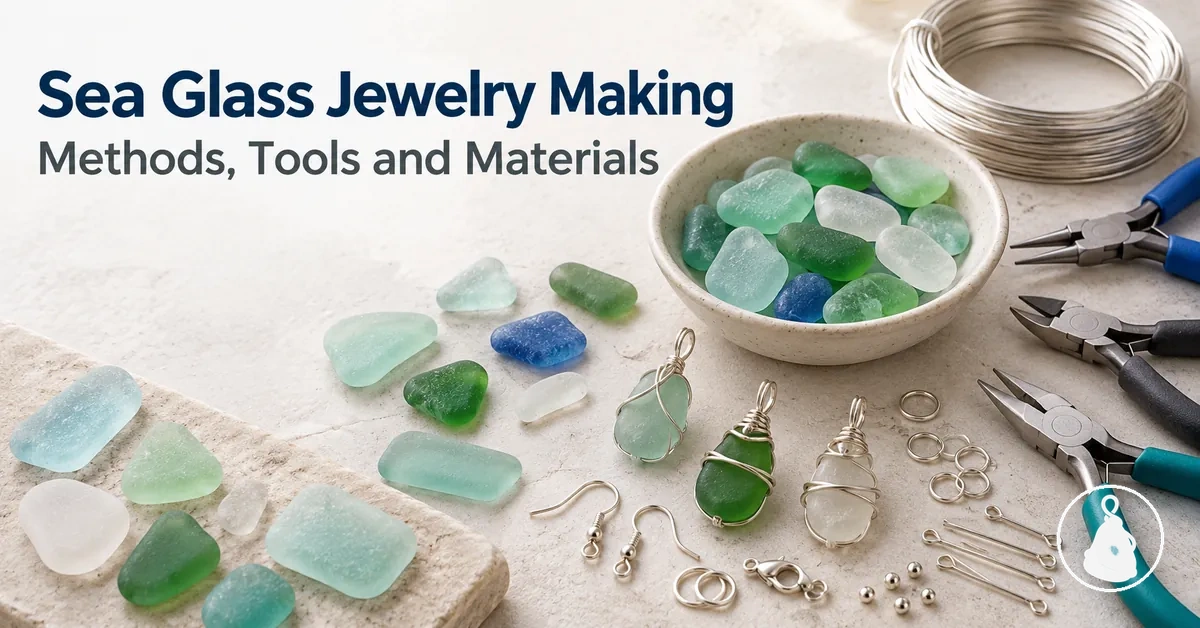
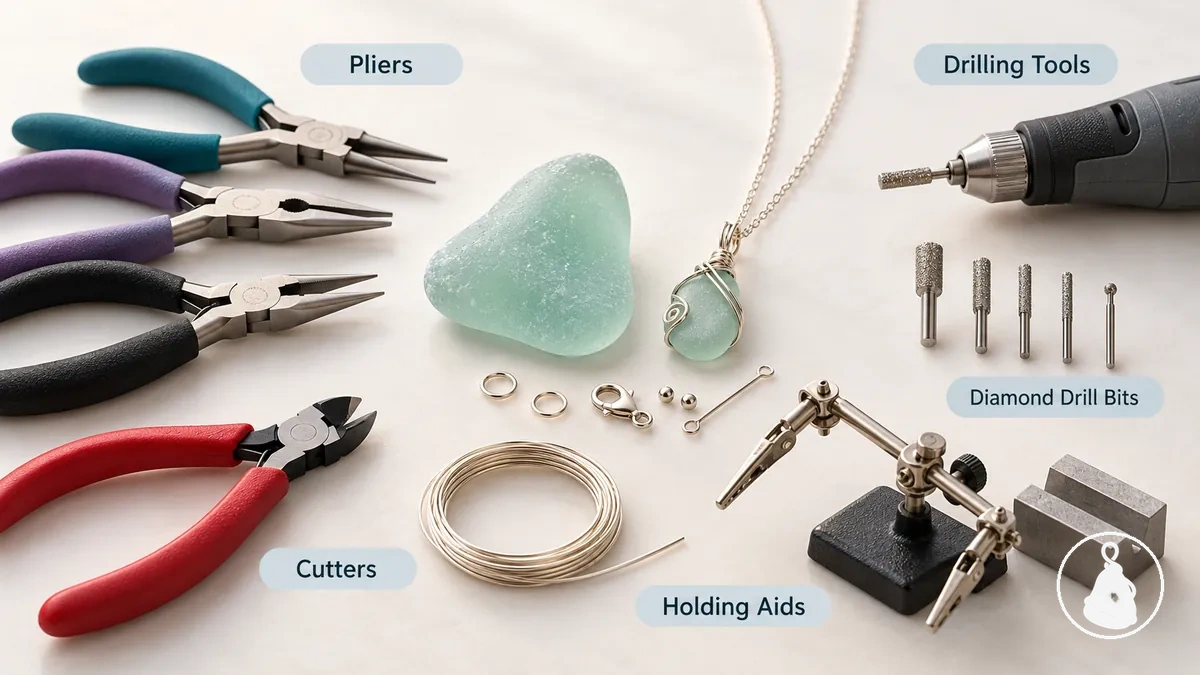
Sea glass jewelry-making tools depend on the attachment method, not on one universal kit. Pliers and cutters are common for wire and finding work, while drilling equipment and diamond drill bits are method-specific to drilled attachments.
Tools by task and attachment-method dependency
Tool category
Function
When needed
Method dependency
Pliers
Grip, bend, shape, or manipulate wire and jewelry findings.
When forming wire or handling findings during assembly.
Broadly useful for wire wrapping and many finding-based assembly tasks; the required plier type follows the specific task.
Cutters
Cut jewelry wire or similar assembly material.
When the selected attachment method uses wire that needs trimming.
Relevant to wire wrapping and other wire-based connections; not required when the selected attachment uses no cut wire.
Holding or measuring aids
Support handling, positioning, or measurement of sea glass and jewelry components.
When the selected method requires the workpiece to be held, positioned, or checked during assembly.
Task-dependent; the required aid follows the attachment method and assembly task.
Drilling equipment and diamond drill bits
Create a drilled hole that serves as a connection point in sea glass.
When the selected attachment method requires a drilled hole.
Specific to drilling; not required for wire wrapping, mechanical no-drill holding, or other attachment methods that secure sea glass without a hole.
Materials and Findings Used in Sea Glass Jewelry
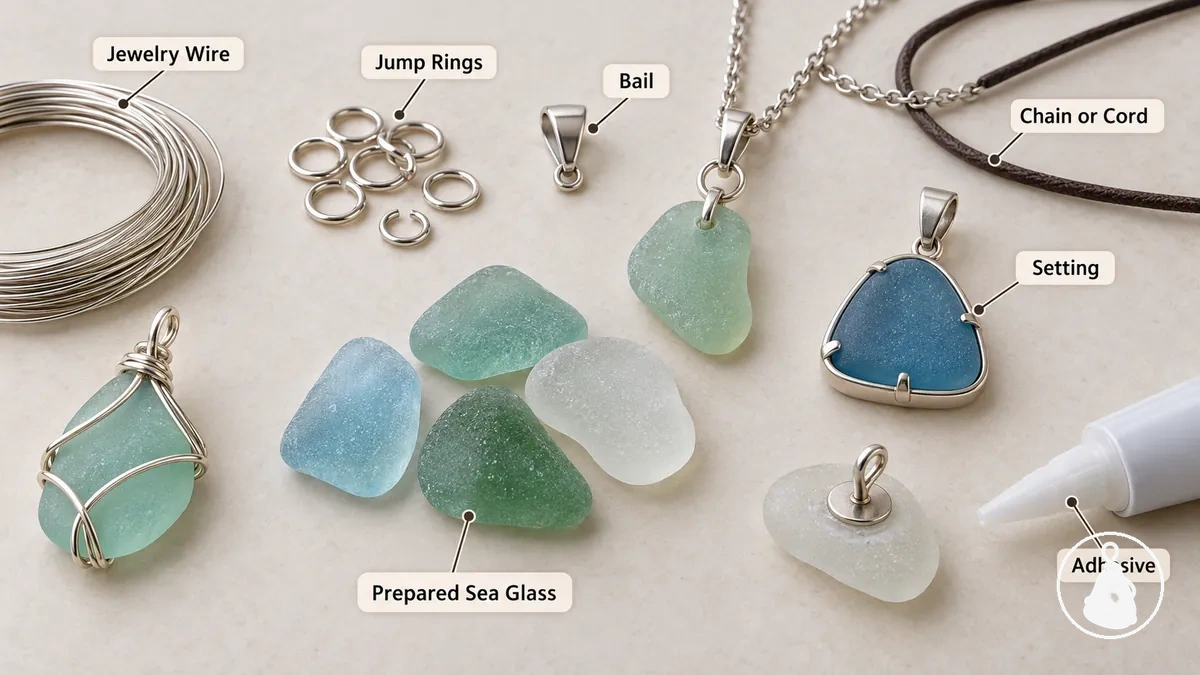
The main material groups are prepared sea glass, the material or mechanism that secures it, and the findings that connect the secured piece to a wearable form. The exact combination follows the chosen attachment method and jewelry design.
Materials and findings by function and attachment condition
Material or finding
Function
Relevant attachment condition
Effect on assembly
Prepared sea glass
Forms the central jewelry element.
Its shape, thickness, surface condition, and presence or absence of a drilled hole determine which attachment approaches are applicable.
Establishes the physical piece that the selected holding mechanism or finding must secure or connect.
Wire
Wraps around sea glass or forms a connection to another jewelry component.
Used when wire wrapping is the holding mechanism or when a drilled connection is designed to use wire.
Provides the holding or connecting material for a wire-based attachment.
Jump rings
Connect an attached sea glass component to another jewelry component.
Used when the sea glass attachment provides a suitable loop, hole, or other connection point.
Provides an intermediate connection to a bail, chain, cord, or another compatible finding.
Bails
Provide a hanging connection between an attached sea glass piece and a chain or cord.
Used when the selected attachment method provides a connection compatible with the bail design.
Creates the hanging interface needed for a pendant-style assembly.
Settings
Hold sea glass within a mechanical jewelry structure.
Used when the sea glass shape and dimensions correspond to the setting's holding geometry.
Provides mechanical capture instead of using wire wrapping as the primary holding mechanism.
Chains or cords
Provide wearable support for a pendant or necklace.
Used when the attached sea glass has a compatible bail, ring, loop, or other connection point.
Connect the sea glass component to the wearable necklace form.
Jewelry-suitable adhesive
Joins a jewelry finding to the surface of sea glass.
Used when the selected attachment method relies on adhesive contact and the adhesive is suitable for both the glass and finding materials.
Provides an adhesive-mounted attachment without using a drilled hole or wire wrap as the primary connection.
Basic Sequence for Making Sea Glass Jewelry
The basic sequence stays consistent through inspection and preparation, then branches after the attachment approach is chosen.
Choose the attachment method before gathering method-specific tools and materials, because drilling, wire wrapping, settings, and adhesive-mounted findings require different ways to secure the glass.
Inspect the sea glass. Check its shape, thickness, edges, and visible condition so these characteristics can inform the attachment choice before preparation continues.
Clean and prepare the sea glass. Clean the piece and complete the preparation required by its condition and the attachment method being considered, leaving it ready for the selected approach.
Choose the attachment approach. Select drilling when the design requires a drilled connection point, or choose wire wrapping, a compatible setting, or another no-drill method when the sea glass will be secured without a drilled hole; this decision determines the tools and materials required next.
Gather the required tools and materials. Assemble the method-specific tools, attachment materials, and jewelry components required by the chosen approach before securing the sea glass.
Secure the sea glass. Use the selected attachment method so the prepared glass is held or connected by the intended drilled connection, wire wrap, compatible setting, or adhesive-mounted finding before adding the wearable component.
Add the wearable finding or cord. Connect the secured sea glass to the finding, chain, or cord required by the intended jewelry form so the attachment becomes part of the wearable assembly.
Check the finished connection. Check the finished connection and connected jewelry components for their intended position and engagement, and address any visible attachment problem before treating the piece as completed wearable jewelry.