Materials and Supplies for Sea Glass Jewelry Making
Choose sea glass jewelry materials by attachment method first: drilled pieces need connector-to-hole fit, wrapped pieces need suitable wire flexibility and support, set pieces need matching setting geometry, and bonded pieces need an adhesive compatible with both surfaces and its cure conditions. Once the interface fits, compare strength, finish and wear conditions; tools are separate reusable implements rather than incorporated materials.
Choose supplies by the way the sea glass will be attached
Start with the attachment interface. It determines the material family and the fit checks that matter most.
Second filter: once physical fit is confirmed, compare strength, finish, skin-contact needs, moisture exposure and expected handling.
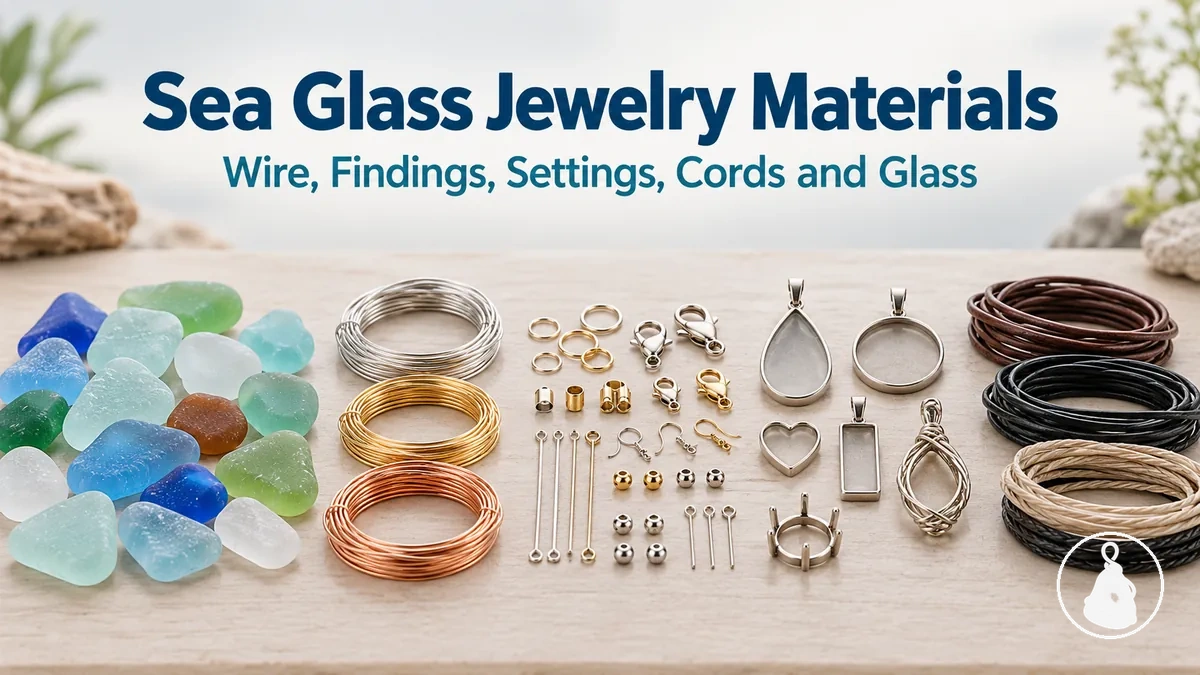
Use the sections below to compare component roles, connection geometry and durability without assuming that one wire, cord, finding, setting or adhesive suits every sea glass piece.
Table of Contents
Essential Materials and Supplies for Sea Glass Jewelry
The essential material families serve different attachment, connection, support and prepared-connection functions; choose the family from the intended attachment before comparing individual products.

Material families at a glance
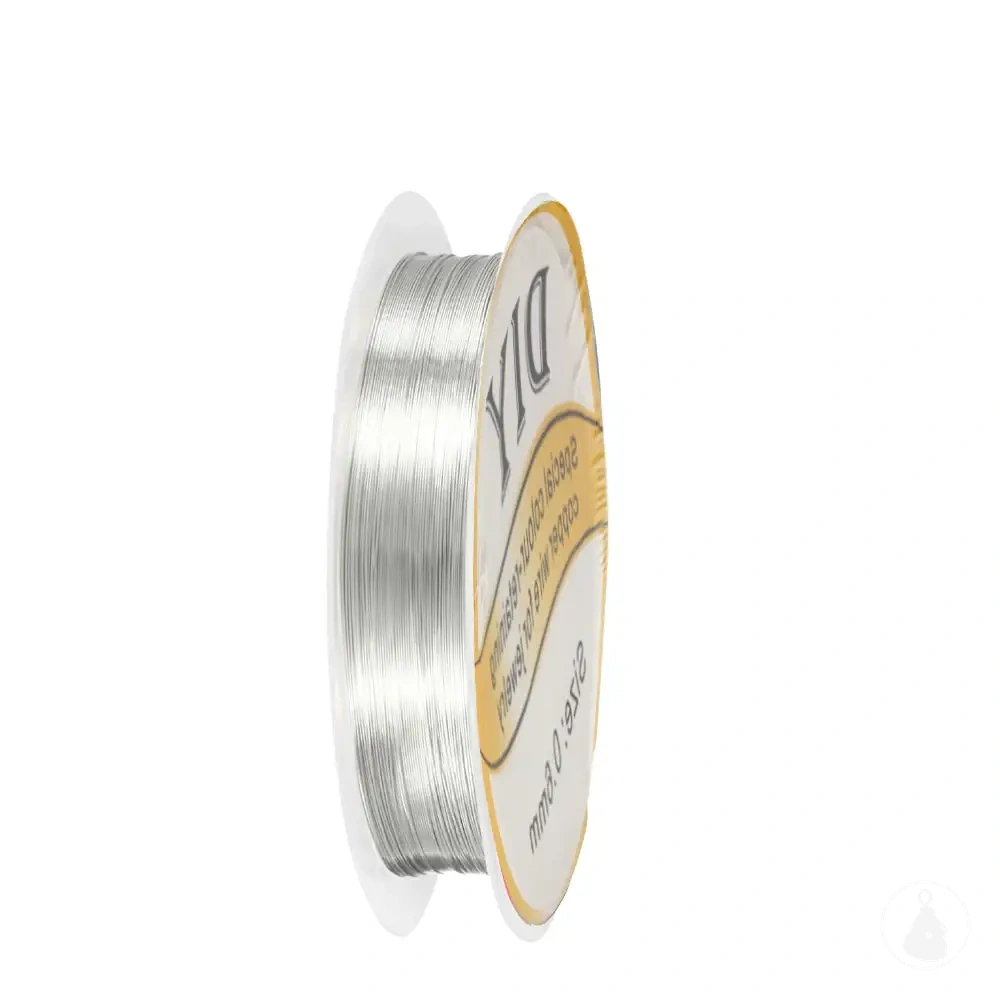
Forms or secures an attachment around the glass. Fit depends on thickness, flexibility, temper and the support required.
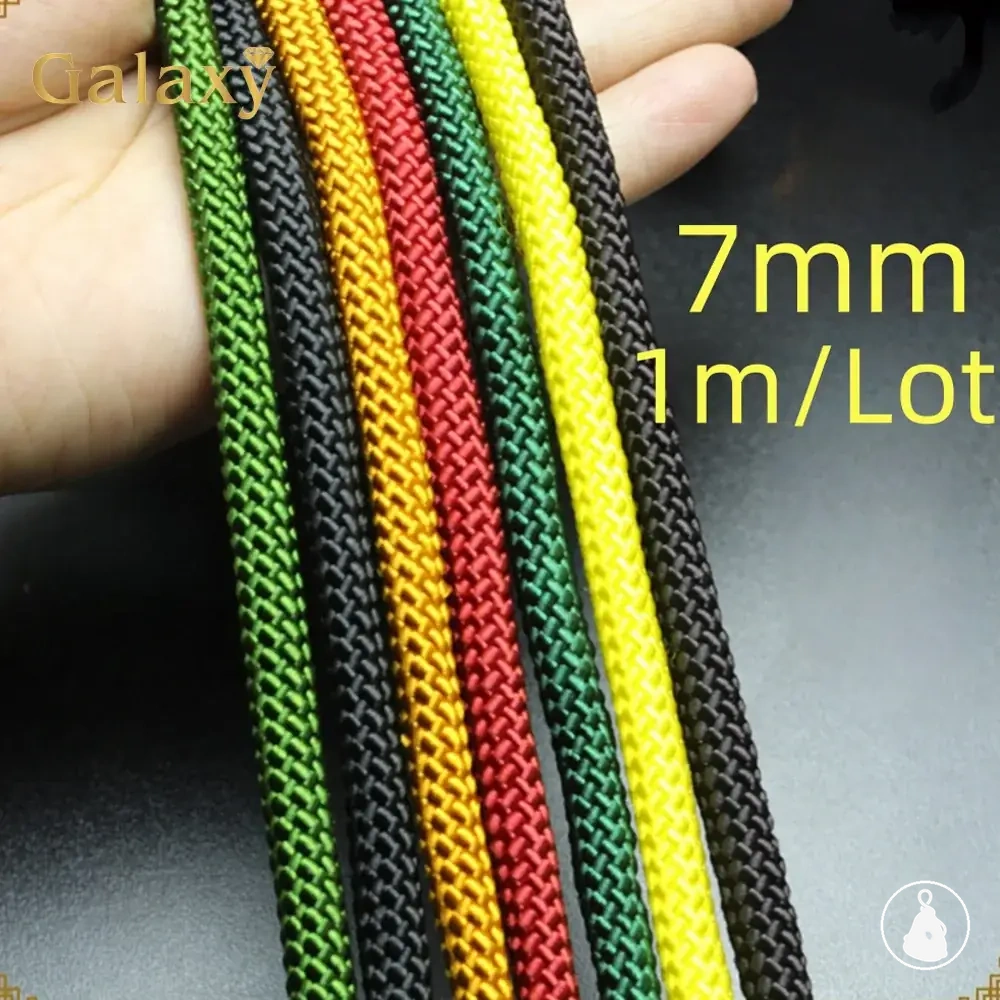
Supports a pendant during wear after a compatible bail, ring, clasp or drilled hole provides the connection.
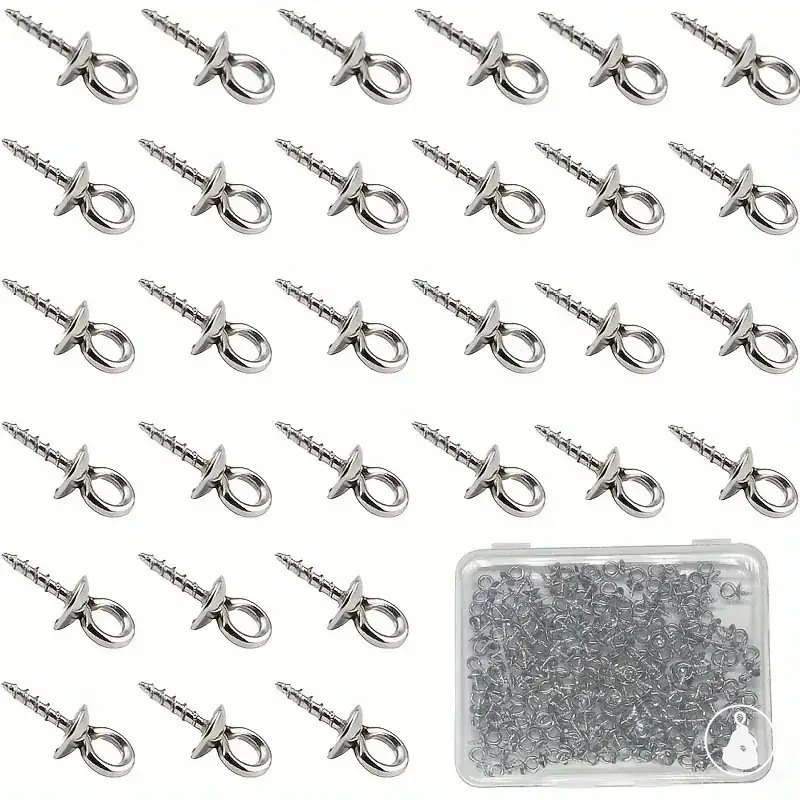
Bails, jump rings and related connectors join attachment points; their opening geometry must fit the components on both sides.
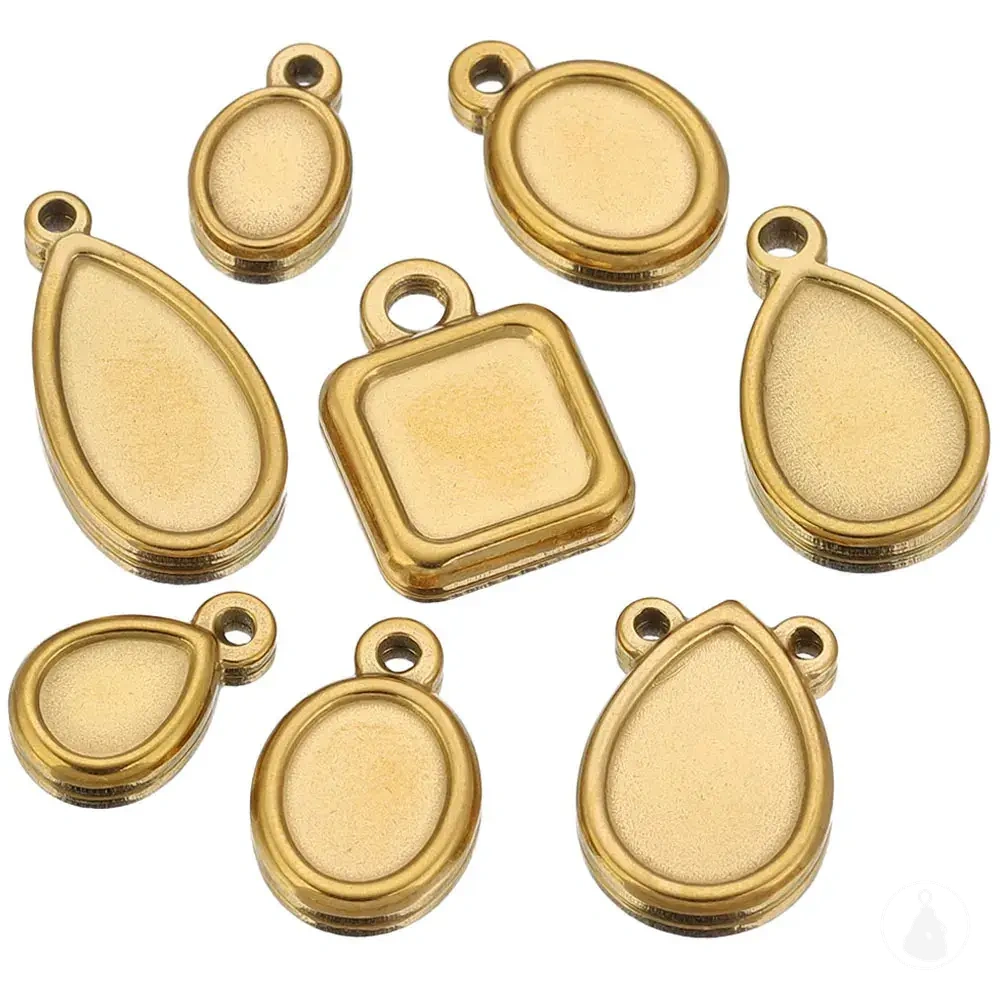
Mechanically retain the glass. Shape, dimensions and retaining surfaces must correspond to the actual sea glass piece.
Creates a bonded attachment. Suitability depends on the substrate pair, usable contact area, cure requirements and wear conditions.
Provides a defined hole-based connection; hole position, size and edge condition determine which connector or cord can fit.
Jewelry Wire and Necklace Cord
Jewelry wire creates or secures a structural attachment, while necklace cord mainly suspends the pendant after a compatible connection point already exists.

Wire versus cord
Role: wrap, frame or secure the sea glass. Check: thickness, temper, flexibility, support and any opening the wire must pass through.
Role: provide wearable suspension. Check: material, thickness, flexibility, abrasion resistance and fit with the bail, ring, hole and closure.
Wire-wrapping technique is a separate decision; here the material question is whether the selected wire or cord physically fits its intended connection and wear conditions.
Findings, Bails and Jump Rings
Findings are connection components: bails create or provide a pendant attachment point, while jump rings connect compatible attachment points.

Connection fit checks
- Bail
- Must fit the sea glass, setting or attachment point and provide a usable passage for the supporting cord or chain.
- Jump ring
- Its opening and internal dimensions must accommodate both components it connects and close in the intended geometry.
- Shared criteria
- Check actual dimensions, opening geometry, metal, finish and expected load; the component name alone does not establish fit.
Settings and Jewelry Adhesives
Settings and jewelry adhesives solve different attachment problems: a setting retains the glass mechanically, while adhesive creates a bonded joint between compatible surfaces.

Mechanical retention versus bonded attachment
Match the setting's shape, dimensions and retaining geometry to the glass so the intended surfaces physically retain it.
Confirm the adhesive is specified for the paired substrates, available contact area, required cure conditions and intended wear environment.
Adhesive selection is product-specific: follow the selected adhesive's stated surface preparation and cure instructions rather than assuming one bonding method suits every glass-to-metal connection.
Prepared and Predrilled Sea Glass
Predrilled sea glass provides a defined connection point, but hole position and dimensions determine which jewelry connection can use it.

Hole position changes the connection
The hole sits near an edge, which can accept a compatible jump ring, bail or similar pendant connector when the opening fits.
The connection passes through the glass body and can suit bead or stringing arrangements when the cord or finding fits the actual hole.
Materials and Supplies Versus Jewelry-Making Tools
Materials and supplies become part of the jewelry or are consumed by the project; tools are reusable implements that manipulate those materials.

Classify the item by its project role
Wire, cord, findings, settings, adhesive and prepared glass are incorporated into the piece or consumed during assembly.
Pliers, cutters and drilling implements are reused to hold, cut, drill, shape or manipulate the materials.
Material Compatibility for Drilled, Wrapped, Set and Bonded Sea Glass
Material compatibility changes with the attachment method because drilled, wrapped, set and bonded sea glass use different physical interfaces.
Use the matrix to match each attachment context to the material family and the fit condition that must be satisfied.
| Attachment context | Material or component | Key fit condition | Decision cue |
|---|---|---|---|
| Drilled sea glass | Finding, jump ring, or cord | Hole geometry must accommodate the connector or cord dimensions | Select a connection type that physically fits the actual hole and glass dimensions |
| Wrapped sea glass | Jewelry wire | Wire flexibility and support must suit the glass shape and wrapped attachment | Select wire whose flexibility and support suit the specific glass form and attachment |
| Set sea glass | Mechanical setting | Setting shape, dimensions, and retaining geometry must correspond to the glass | Match the setting dimensions and retaining geometry to the actual glass shape |
| Bonded sea glass | Jewelry adhesive and attachment component | Adhesive must suit the paired substrates, available contact area, and intended wear conditions | Verify the adhesive's stated substrate and cure requirements for the specific material pairing |
Verify the actual component dimensions, material pairing and intended wear conditions for the specific sea glass piece rather than treating any supply as universally compatible.
Choose Wire, Cord and Findings by Size, Strength and Finish
Choose wire, cord and findings by matching physical dimensions first, then compare strength, flexibility, material and finish within the components that actually fit the sea glass and its attachment.
A heavier pendant, a smaller opening or a different connection geometry can change which component is suitable, so size, strength and finish must be evaluated together.
Before you choose
- Sea-glass size and weight: identify the attachment demand created by the specific piece, then select components whose stated dimensions and intended use correspond to that load and connection.
- Wire gauge or thickness: confirm that the wire has the flexibility needed for the attachment and that its thickness fits any opening it must pass through.
- Cord thickness: match the cord dimensions to the bail, ring, clasp, or drilled opening so the connection can physically accommodate the cord.
- Finding dimensions: check opening size and closure geometry against the mating components so the finding can physically connect both sides.
- Metal or material type: select materials according to the mating components and intended skin-contact conditions rather than appearance alone.
- Finish and wear exposure: match the surface finish to its stated care requirements and the expected moisture, contact, and handling conditions.
- Mating-component consistency: verify that wire, cord, findings, and their connection points remain dimensionally compatible throughout the assembled connection.
Wire Gauge, Temper and Metal
Jewelry wire suitability depends on gauge, temper, metal, glass size and attachment demand rather than gauge alone.
- Gauge
- Describes wire thickness. With American Wire Gauge (AWG), a lower gauge number means a thicker wire; compare actual diameter when opening clearance matters.
- Temper
- Describes stiffness. Common jewelry-wire categories include dead-soft, half-hard and full-hard; greater stiffness generally improves shape retention but reduces ease of forming.
- Metal and finish
- Influence workability, appearance, surface durability and suitability for the intended skin-contact and wear conditions.
Softer or thinner wire generally conforms more readily around irregular glass, while thicker or stiffer wire can provide more structural support when the attachment requires it.
No single wire gauge guarantees suitable holding strength or flexibility across every metal and temper. Choose the combination from the actual glass shape, required support, connection clearance and wear context.
Cord Material, Thickness and Closure Compatibility
Necklace cord is suitable only when its material, thickness and closure system all fit the pendant connection and intended wear.
- Material
- Construction influences flexibility and abrasion resistance; waxed cord, leather cord and other materials can behave differently in wear.
- Thickness
- The cord diameter must physically pass through or seat correctly in the bail, ring, clasp or drilled opening.
- Closure system
- The cord, connector and closure hardware must fit together while providing the support required by the pendant.
Choose cord after checking connection geometry, pendant support, skin-contact conditions and expected bending or rubbing; a cord that is too thick for the opening is incompatible regardless of its strength.
Finding Size, Metal and Connection Compatibility
A finding is compatible only when its actual internal dimensions and opening geometry fit the components it must join.
- Dimensions
- Check internal clearance and opening size against the bail, hole, wire, cord or setting connection rather than relying on nominal size alone.
- Closure geometry
- The connector must pass through the mating components and close in a way that preserves the intended connection.
- Material and load
- Metal, finish and construction must suit the paired components, expected wear and the load of the pendant or connected assembly.
A bail, jump ring, clasp or related connector is suitable when dimensions, closure style, material characteristics and expected load all correspond to the specific attachment.
Material Quality and Durability in Finished Jewelry
Material quality in finished sea glass jewelry is judged by attributes that affect connection reliability, durability, comfort and appearance retention under the intended wear conditions.
Moisture, handling, skin contact, material pairing and construction quality can change wear outcomes, so evaluate each component against its actual use environment.
| Material/component | Quality attribute | Condition to inspect | Decision implication |
|---|---|---|---|
| Wire | Corrosion resistance and finish integrity | Metal and surface finish specified for the expected moisture, handling, and skin-contact conditions | Select wire whose material and finish specifications correspond to the intended wear environment |
| Cord | Abrasion resistance and flexibility retention | Construction and material properties specified for the expected bending, rubbing, and pendant-support conditions | Select cord whose stated properties correspond to the expected wear conditions |
| Findings | Connection security and finish integrity | Opening and closure geometry fit the mating component, with no visible damage affecting the connection surface | Reject mismatched geometry or visible damage where either condition compromises the intended connection |
| Settings | Connection security and finish integrity | Retaining geometry fits the sea glass, and the metal finish corresponds to expected exposure conditions | Select a setting whose physical fit and material condition correspond to the intended jewelry use |
| Bonding materials | Bond reliability | Adhesive specifications cover the paired surfaces, attachment contact area, required cure conditions, and intended use | Judge suitability from the adhesive's stated substrate, cure, and use-condition requirements for the planned attachment |
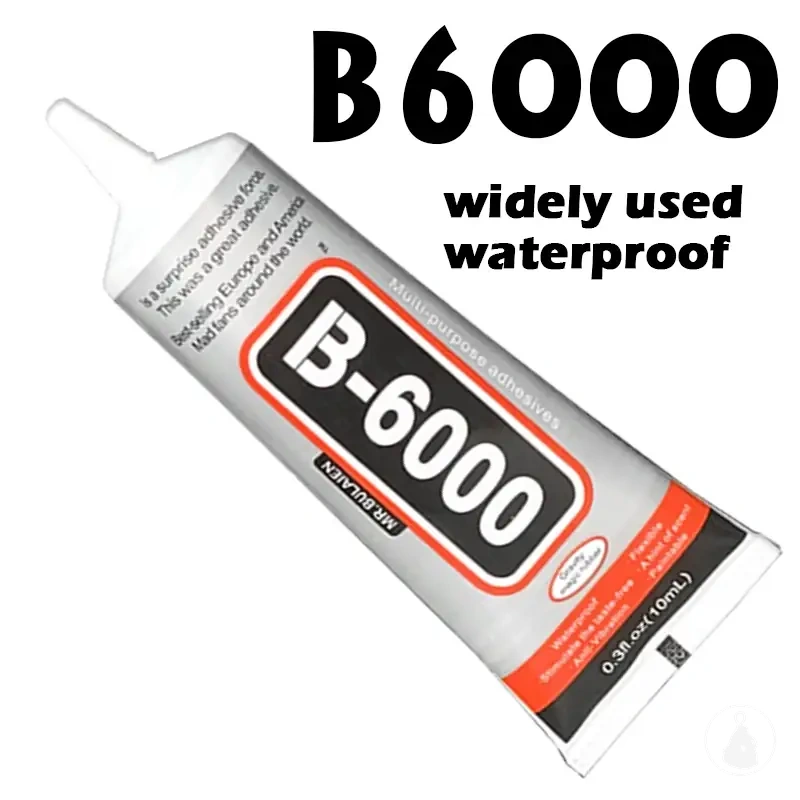
The products below are examples for comparing material types. Use the fit and durability checks above before following a product link.